




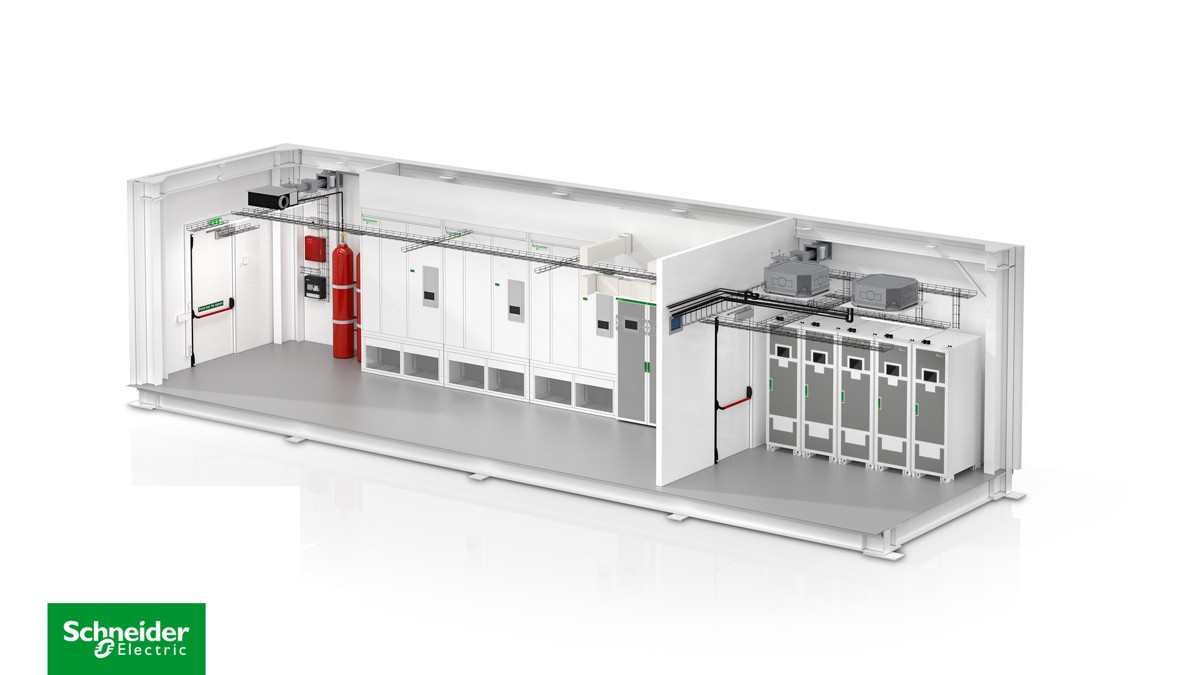
Schneider Electric introduces RapidScale design for modular AI data centres
Network
Hits: 5
RapidScale Reference Design 115 brings together power, liquid cooling and modular delivery for AI infrastructure based on NVIDIA’s Vera Rubin platform.
Dji Banner Inside Article - 728x90

A repeatable framework for AI infrastructure
Schneider Electric has introduced RapidScale Modular Data Centre Reference Design 115, an engineered framework for high-density artificial intelligence infrastructure. The company says the design supports NVIDIA’s Vera Rubin platform and combines power systems, liquid cooling, IT space, software and lifecycle services within a modular delivery approach.
The objective is to move from individually engineered facilities towards repeatable designs that can be integrated and tested before delivery. Schneider Electric describes intelligent temperature controls and liquid cooling as part of the framework for managing the energy and thermal demands of high-density computing.
Capacity growth increases delivery pressure
The company forecasts that global data centre capacity will expand by 170 GW to reach 300 GW by 2030, approximately 2.3 times the 2025 installed base. It expects AI workloads to account for around 65% of demand at the end of the decade. These are Schneider Electric’s estimates, used in the announcement to explain the pressure on infrastructure delivery.
Higher-density computing increases power and cooling requirements while adding integration complexity. Developers must also address grid capacity, efficiency requirements, regulatory obligations and skilled labour constraints. Schneider Electric argues that the speed, predictability, repeatability and quality associated with prefabrication are becoming core delivery requirements rather than optional advantages.
A site study reports shorter installation time
A technical paper produced with Compass Datacenters compares traditional IT-space construction with prefabricated modular IT units. The study, identified as White Paper 238, reports that on-site installation time per unit at a large Compass campus fell from 75.5 hours to 15 hours, a reduction of about 80%.
The study concerns that particular deployment, rather than a guaranteed reduction for every project. Its central approach was to move assembly, integration and validation into a controlled factory environment, reducing the number of interdependent tasks that had to be coordinated on site. Compass CTO Adil Attlassy said combining the systems within a prefabricated module helped customers begin running workloads earlier.
RapidScale links delivery with lifecycle support
RapidScale covers design, delivery and support of prefabricated modular AI infrastructure. Schneider Electric says Reference Design 115 is also an initial foundation for supporting the NVIDIA DSX POD reference design, with factory integration and verification intended to shorten the time before computing capacity becomes productive.
The company reports that approximately 90% of the equipment used in RapidScale comes from its own portfolio. It says production capacity has increased fourfold since 2025, supported by eight main facilities covering 1.35 million square feet, three additional facilities and 12 partner sites across 10 countries.
Manish Kumar, Executive Vice President for Secure Power and Data Centres, linked the offering to demand for standardised infrastructure that can be delivered reliably and supported throughout its lifecycle. The announcement says the modular reference design has been validated against ANSI standards for US applications, with broader IEC support planned for future global use.


