




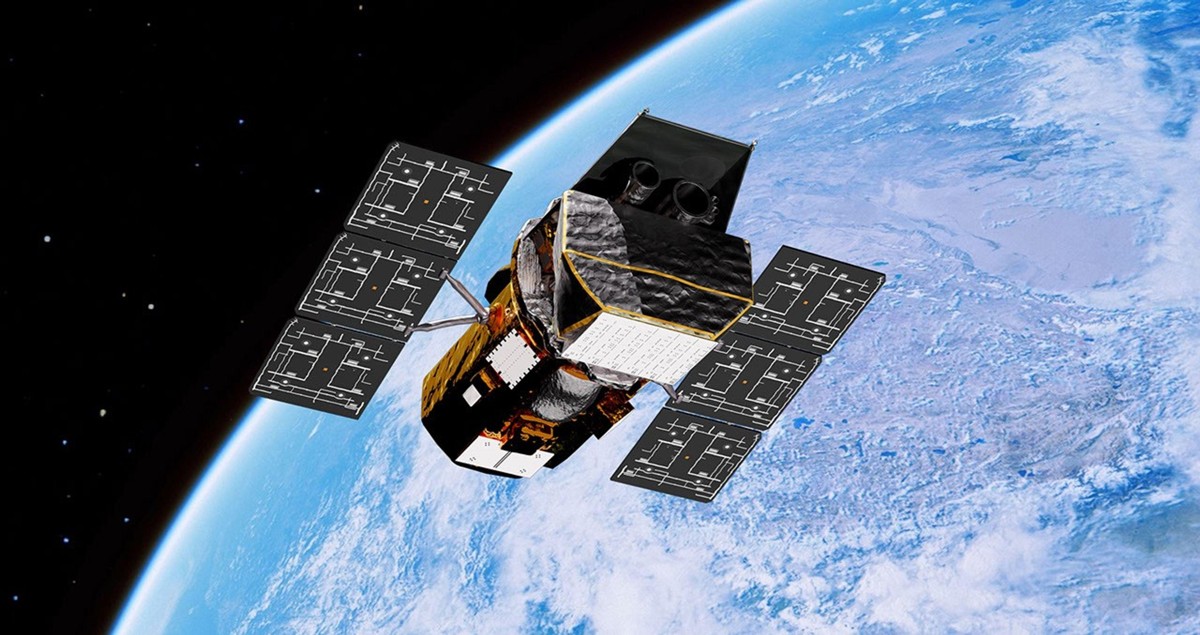
NASA expects Swift Observatory to re-enter the atmosphere on 4 November
Photo and Video Technologies
Hits: 16
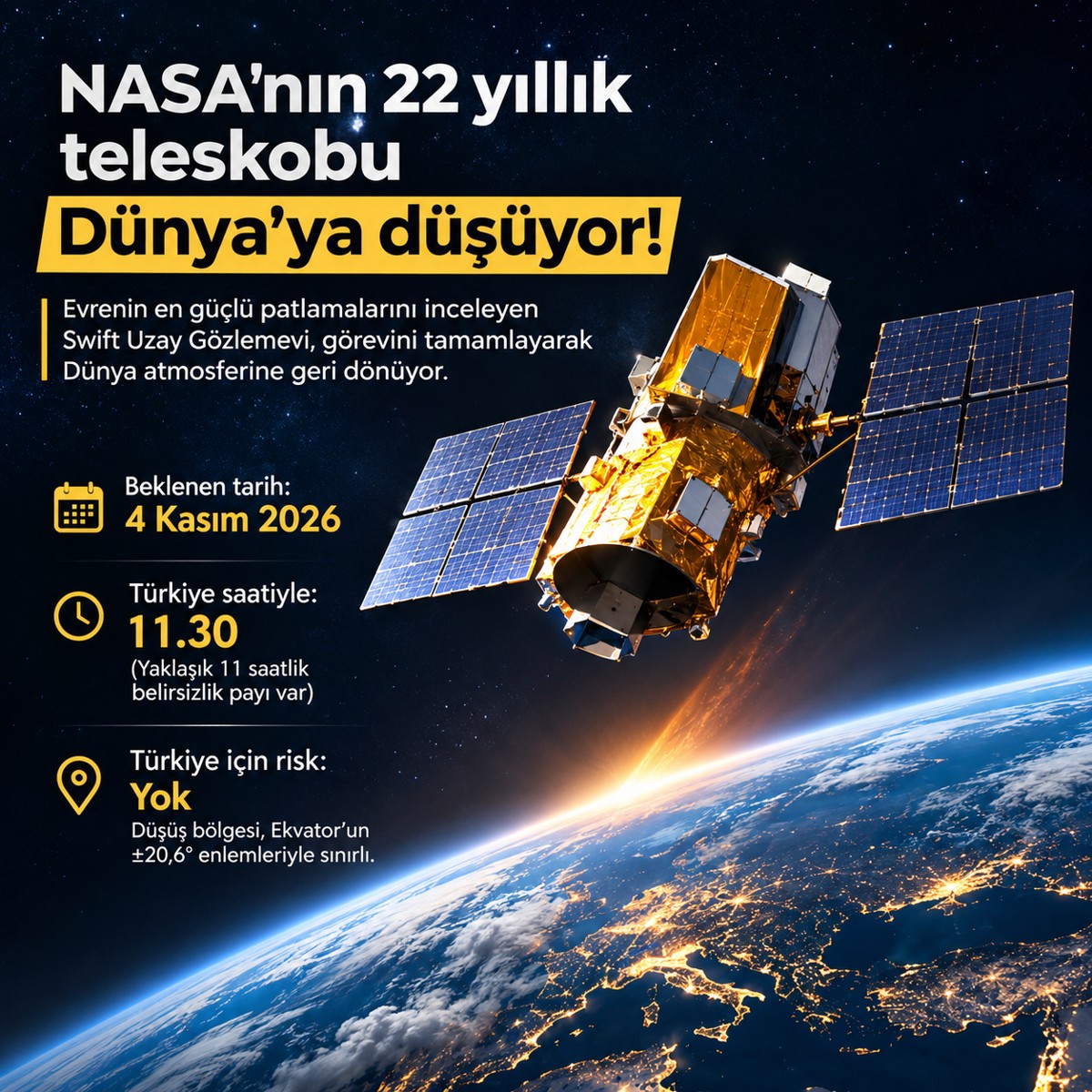
NASA expects the nearly 22-year-old Swift Observatory to re-enter on 4 November 2026. The agency’s timing estimate carries an uncertainty of 11 hours.
A forecast, rather than a fixed impact time
NASA says the Neil Gehrels Swift Observatory is approaching atmospheric re-entry after almost 22 years in orbit. Its 2 November announcement cites a U.S. Space Force prediction of about 3:30 a.m. EST on Wednesday, 4 November, equivalent to 11:30 a.m. in Türkiye. That estimate includes an uncertainty of 11 hours. The projected time should therefore not be treated as an exact appointment or a confirmed location for falling debris.
Most of the spacecraft is expected to burn up
The roughly 1,450-kilogram observatory is expected to break apart and mostly burn up as it passes through the atmosphere. Some components could survive. Where those pieces might arrive depends on when re-entry occurs, so a specific impact point cannot be inferred from the nominal time alone. NASA and the U.S. Space Force continue to monitor the spacecraft and refine their predictions.
Swift’s low orbital inclination limits possible surviving-fragment locations to the belt between approximately 20.6 degrees south and 20.6 degrees north. Türkiye lies outside that latitude range. NASA puts the chance that surviving material harms someone anywhere on Earth at approximately one in 2,100. This is a worldwide event-level estimate, rather than a statement that any individual faces that probability.
A two-year mission that lasted two decades
Swift launched on 20 November 2004 with a planned two-year primary mission. It studied gamma-ray bursts and other transient astronomical events, using several instruments to observe different parts of the electromagnetic spectrum. Its ability to turn quickly toward brief cosmic outbursts and alert other observatories made it valuable for coordinated follow-up work.
The spacecraft ultimately remained scientifically productive for more than ten times its original planned mission. Its observations contributed to thousands of research studies and a much broader understanding of energetic events in the universe.
Why its orbit could no longer be maintained
Increased atmospheric drag at low altitude made stable observations progressively more difficult. An attempted robotic mission to raise Swift’s orbit did not succeed, and the observatory completed its final science observations in October. Its long operational life now gives way to the separate task of tracking its return through the atmosphere.
The end of Swift’s mission also highlights the importance of planning for the safe retirement of satellites. Its scientific archive remains available for research even as the physical spacecraft approaches the end of its journey.
Reporting: Erkan Veyseloğlu


