


Yazma
Advanced Hybrid Technology and Next-Generation Connectivity Features
The all-new Hyundai TUCSON strengthens its position in the C-SUV segment with bold design, increased dimensions, and next-generation technologies.
Standing out with advanced hybrid and plug-in hybrid powertrain options, the TUCSON introduces HEV Stay Mode, a segment-first feature that delivers electric-vehicle-like comfort even when the vehicle is parked.
AI-powered Pleos Connect, a spacious interior, and luggage capacity of up to 695 liters make the TUCSON adaptable to every need, from everyday driving to family trips.
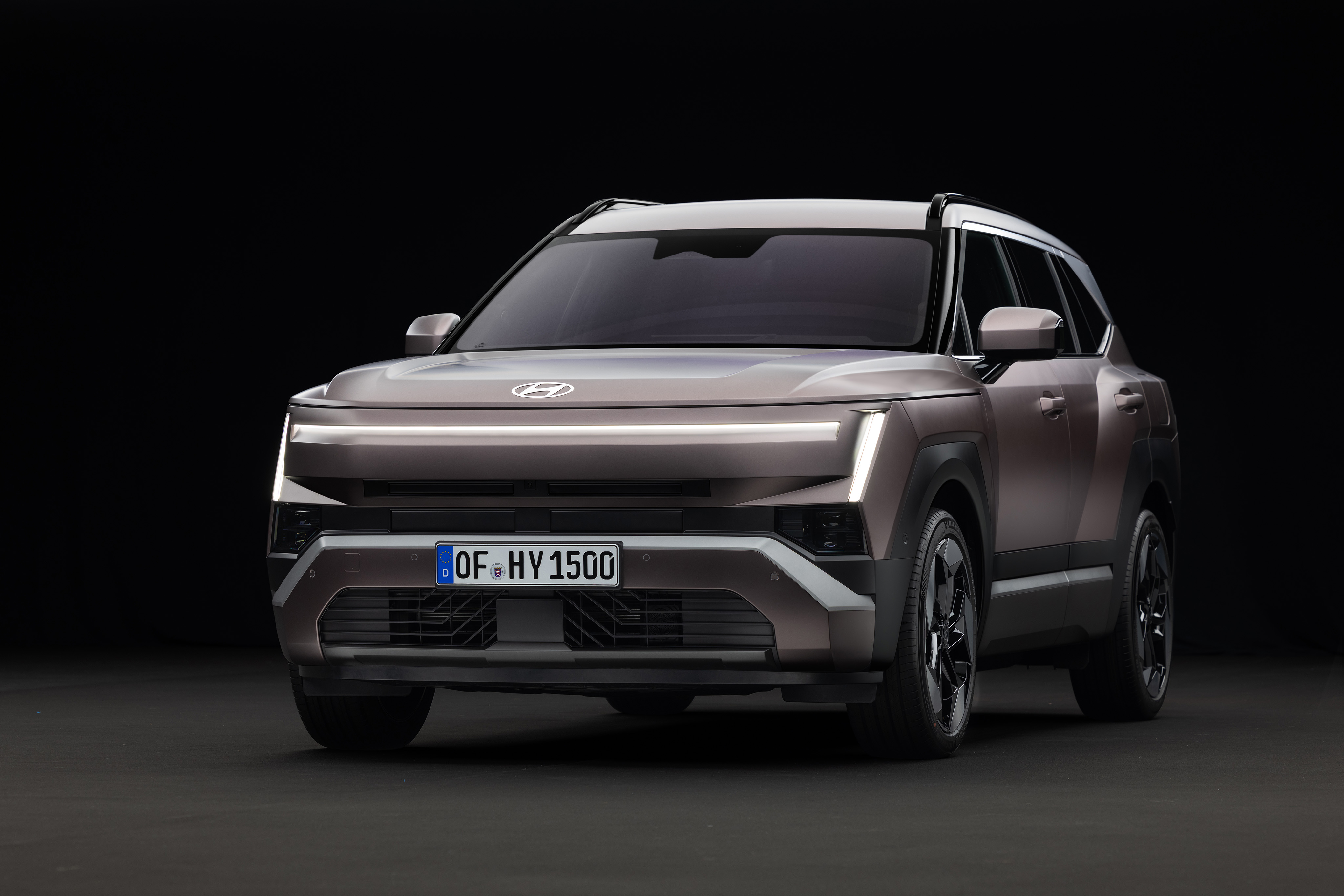
Hyundai Motor has unveiled the all-new TUCSON, combining advanced electrified powertrains with its next-generation Pleos Connect infotainment system. The new model in the C-SUV segment stands out with its confident design, enhanced comfort, and versatile capabilities.
Developed in line with Hyundai Motor’s “Art of Steel” design philosophy, the all-new TUCSON combines a muscular exterior with a functional, well-organized interior. This approach, designed to make everyday driving easier, adapts to different lifestyles and changing needs. With its increased dimensions, spacious and flexible cabin, and Hyundai’s advanced electrified powertrains, the new TUCSON has been developed to meet a broad range of customer expectations, from daily commuting and family use to long-distance journeys and holiday activities.
Since its debut in 2004, the TUCSON has achieved more than 2 million sales in Europe, becoming one of Hyundai’s most successful models in the region. In 2025, the model ranked first in the C-SUV segment for sales to private customers in Europe.*
Xavier Martinet, President and CEO of Hyundai Motor Europe, commented on the new model:
“Refreshing an iconic model is never easy. We could have taken the risk-free route and simply made a successful model one step better. But that is not Hyundai’s approach. We challenged ourselves to take the TUCSON forward in every area that matters to our customers, from design and comfort to technology and efficiency. The result is not just a new-generation TUCSON; it is the best TUCSON we have ever built.”
How Does “Art of Steel” Shape the Bold Appearance of the New TUCSON?
The all-new TUCSON brings Hyundai’s “Most Confident SUV” concept to life through its “Art of Steel” design language, combining structural strength with a commanding road presence. Every detail, from its muscular exterior to its carefully crafted interior, reflects functional engineering and an aesthetic vision.
At the heart of the exterior design are pronounced, muscular fenders that emphasize the natural tension and strength of steel. This appearance is balanced by clean door surfaces and sharp body lines, reinforcing the new TUCSON’s confident SUV identity.
The new TUCSON measures 4,560 mm in length, 1,900 mm in width, and 1,670 mm in height. Compared with its predecessor, it is 35 mm longer, 35 mm wider, and 20 mm taller, delivering a stronger road presence while providing more interior space.
The front overhang has been extended by 20 mm to support pedestrian protection requirements, while the door opening angle has increased from 73 to 83 degrees to make entering and exiting the vehicle easier.
New exterior colors available in Europe include Moonlake Blue Metallic, Moonlake Blue Matte, Rich Walnut Metallic, Rich Walnut Matte, and Ignite Red.
Another version of the new TUCSON, featuring a more dynamic design, will be unveiled at the Paris Motor Show on October 12, 2026.
What Defines the New TUCSON’s Lighting Signature?
At the front, H-Edge lighting combines indirect central illumination with edge lighting, emphasizing the vehicle’s horizontal proportions and creating a wider, more balanced appearance. Integrated into the front design, this lighting delivers a distinctive signature both day and night.
The rear lighting further emphasizes the vehicle’s volume and contours. Its three-dimensional internal structures create a distinctive lighting signature, reinforcing the clarity and technological character of the rear design.
Depending on the trim level, the new TUCSON is also available with Micro Pixel Lighting (MPL). Featuring 25,600 individually controlled LED pixels, the system enables precise light distribution as well as welcome and farewell animations.
LED rear lights are standard across all versions in Europe, while availability in other markets varies according to regional equipment specifications.
How Does the New TUCSON Redefine Cabin Comfort and Versatility?
The new TUCSON’s interior emphasizes comfort inspired by furniture design and intuitive controls, creating a living space defined by refined aesthetics and carefully considered details. From softly padded surfaces to ergonomically positioned displays, every element contributes to reducing stress, promoting relaxation, and creating a calmer cabin environment.
The function-oriented cabin design reinterprets minimalism in the SUV segment. The two-tier dashboard separates form from function. Its horizontal upper section creates a sense of visual openness and simplicity, while the deep, open storage compartment below provides practical utility.
Soft, generously padded surfaces across the upper dashboard, doors, and center-console armrest bring the comfort of home into the vehicle, creating a premium and relaxing interior.
To minimize driver distraction, frequently used information and controls are positioned within the driver's natural field of vision. The slim 9.9-inch digital instrument cluster sits above the steering wheel, while an optional Head-Up Display projects essential driving information directly onto the windshield. This allows drivers to access key information without taking their eyes off the road.
The electrically adjustable steering wheel makes it easier to find an ideal driving position, enhancing both comfort and ergonomics.
Physical buttons beneath the central infotainment display provide direct access to essential functions. The extended center-console armrest offers additional support while operating the central display.
The console includes concealed storage compartments for small personal items, along with two 15 W wireless charging units. Four 100 W USB-C ports throughout the cabin enable fast charging for laptops, tablets, and other compatible devices, providing one of the most advanced device-charging solutions in the segment.
The gear selector integrated into the steering column frees up additional space in the center console. An illuminated gear indicator and a single-button shift to Park simplify operation while reinforcing the “Eyes on the Road, Hands on the Wheel” design philosophy.
The new TUCSON offers generous passenger space, with 1,038 mm of front headroom, 1,002 mm of rear legroom, and 1,470 mm of front shoulder room.
Depending on the trim level, comfort features include the Ergo Motion driver's seat, which uses a seven-cell pneumatic system to provide lumbar and lateral support as well as massage functions. Relaxation Comfort seats for the driver and front passenger can recline at the touch of a button, providing additional comfort during breaks.
The Multi-Air system actively manages climate-controlled airflow through the main vents, multiple air channels, and floor-level outlets, reducing discomfort caused by direct airflow. The three-zone climate control system also allows temperatures to be adjusted independently in different areas of the cabin.
An optional 13.5 V metal-coated heated windshield can clear ice across the entire windshield within 15 minutes in harsh winter conditions. In summer, it reflects 60% of solar energy, helping keep the cabin up to 2°C cooler and reducing the load on the air conditioning system and fuel consumption.
This transparent conductive coating technology combines more than 20 layers of metal, dielectric, and ceramic materials. It performs its heating function without visible heating wires, preserving the clean appearance of the cabin.
Practical details throughout the interior also simplify everyday use. Concealed umbrella compartments integrated into both front door panels and dedicated cupholders in the rear door trim provide additional convenience.
The second-row AddGear mounting point supports Hyundai’s open AddGear ecosystem. Smartphone holders, tablet mounts, fragrance diffusers, and other lifestyle accessories can be easily integrated into the interior, allowing for a more personalized cabin environment.
Interior color combinations available in Europe include Black, Dark Blue Gray/Dove Gray, and Misty Plum. Upholstery options comprise fabric, fabric/leather, and leather.
How Do the TUCSON’s Advanced Technologies Support Connected and Confident Driving?
The all-new TUCSON offers a comprehensive suite of connectivity, infotainment, and driver-assistance technologies designed to make everyday journeys easier and more intuitive.
Based on Android Automotive OS (AAOS), Pleos Connect combines a central infotainment display available in 12.9-inch and 17-inch sizes with a slim 9.9-inch driver display.
The AI-powered Gleo AI voice recognition system can access up-to-date information online. This allows drivers to access functions and information without having to navigate through multiple on-screen menus.
The Android Automotive OS platform also provides integrated access to compatible applications and connected services. Over-the-air (OTA) software updates enable selected vehicle systems and infotainment functions to be updated remotely.
To enhance the in-car audio experience, the new TUCSON is also available with a premium 12-speaker Bang & Olufsen sound system. Smart Mood Lamp adds interactive ambient lighting to enrich the cabin experience.
Convenience features include Hyundai Digital Key 2, which allows users to unlock and start the vehicle using compatible smartphones and smartwatches.
The Memory Reverse Assist (MRA) system can record up to 50 meters of a forward maneuver performed at speeds of up to 30 km/h. When reversing along the recorded route, it assists with steering control to help the driver retrace the path.
On all-wheel-drive models, the Ground View Monitor (GVM) provides a more detailed view of the vehicle's surroundings and the area beneath it, making maneuvering in challenging conditions easier.
Remote Smart Parking Assist (RSPA) helps the vehicle enter and exit parking spaces remotely, while Parking Collision-Avoidance Assist helps reduce the risk of collisions during low-speed parking maneuvers.
An optional digital center rearview mirror provides a clear, unobstructed rear view even when the rear window is blocked by passengers or luggage.
Towing capacity varies by powertrain, reaching up to 1,910 kg in the hybrid version, a class-leading figure. The plug-in hybrid version offers a towing capacity of up to 1,810 kg on a 12% gradient.
Trailer Reverse Assist (TRA) supports steering control when reversing with a trailer, making low-speed maneuvers easier.
How Does the TUCSON’s Advanced Hybrid System Balance Performance, Efficiency, and Comfort?
At the heart of the new TUCSON’s electrified powertrain lineup is Hyundai’s advanced hybrid system. It has been developed to combine responsive performance with efficient, comfortable, and refined everyday driving.
HEV Stay Mode allows selected vehicle functions, including climate control, the audio system, and device charging, to remain available while the internal combustion engine is switched off. This provides a quieter and more comfortable cabin environment during stops and breaks.
Engine options include a 150 PS 1.6 T-GDI gasoline engine, available with either a six-speed manual transmission or a 48 V mild-hybrid system paired with a seven-speed dual-clutch transmission (7-DCT), as well as hybrid and plug-in hybrid versions.
The hybrid version delivers 245 PS and 380 Nm of torque. The plug-in hybrid TUCSON PHEV combines a 1.6-liter turbocharged gasoline engine with a plug-in hybrid system, producing up to 292 PS and 380 Nm of torque.
Its 17.1 kWh battery provides an estimated all-electric driving range of up to 81 km with 17-inch wheels.
This figure is subject to final homologation approval. The 7.2 kW onboard charger enables convenient AC charging at home or at public charging stations.
The model also offers a comprehensive suite of Hyundai SmartSense driver-assistance systems. Forward Collision-Avoidance Assist 2 and Highway Driving Assist 2 work alongside technologies such as Intelligent Speed Limit Assist (ISLA) and Navigation-based Smart Cruise Control.
ISLA helps drivers comply with detected speed limits, while Navigation-based Smart Cruise Control uses navigation data to adjust the vehicle's speed according to specific road conditions.
How Does the TUCSON Support Passenger Safety?
The all-new TUCSON combines a reinforced body structure with Hyundai SmartSense safety and driver-assistance technologies to enhance passenger protection and driver confidence in everyday use.
The new TUCSON is equipped with seven airbags in total, including driver and front-passenger airbags, front side airbags, a center side airbag, and full-length curtain airbags.
The body structure incorporates hot-stamped high-strength steel and reinforced B-pillars to help manage forces during a collision.
The In-Cabin Monitoring Unit (ICMU) uses camera-based technology to monitor driver attention and passenger status. The system can detect the driver's gaze direction and signs of drowsiness, issuing appropriate warnings when necessary.
Child Presence Detection (CPD) and Rear Occupant Alert (ROA) provide additional safety support by warning the driver when someone may have been left inside the vehicle.
With its design, electrified powertrains, connectivity technologies, practical interior, and comprehensive safety equipment, the new TUCSON further develops the strengths that underpin its position in Hyundai’s European SUV lineup.
Technical Specifications
Dimensions and Exterior Features
| Category | Specification |
|---|---|
| Length | 4,560 mm (+35 mm) |
| Width | 1,900 mm (+35 mm) |
| Height | 1,670 mm (+20 mm); 1,685 mm with roof rails |
| Wheelbase | 2,720 mm (+40 mm) |
| Ground clearance | 169 mm; 159 mm in Western Europe with 17-inch wheels |
| Front overhang | 915 mm (+20 mm for pedestrian protection) |
| Rear overhang | 925 mm |
| Wheel and tire options | 215/65R17, 235/55R18, 235/50R19, 235/45R20 |
| H-Edge lighting | Architecture-inspired indirect central and edge lighting design; described as a world-first in the segment |
| Prismatic rear lights | Sculptural three-dimensional floating design with a fine pattern; distinctive design element |
| Micro Pixel Lighting (MPL) | 25,600 individually controlled LED pixels |
| Exterior colors | Atlas White, Serenity White Pearl, Ecotronic Gray Pearl, Abyss Black Pearl, Shimmering Silver Metallic, Shadow Gray, Moonlake Blue Metallic (new), Moonlake Blue Matte (new), Ignite Red (new), Rich Walnut Metallic (new), Rich Walnut Matte (new) |
Interior Dimensions and Features
| Category | Specification |
|---|---|
| Luggage capacity | 695 liters (European VDA) |
| Seating height, first row | 314 mm |
| Seating height, second row | 376 mm (+9 mm) for ICE/HEV; 334 mm (+19 mm) for PHEV |
| Headroom, first row | 1,038 mm (+21 mm); 990 mm with sunroof |
| Headroom, second row | 1,014 mm (+14 mm); 977 mm with sunroof |
| Legroom, first row | 1,052 mm |
| Legroom, second row | 1,002 mm (+6 mm) |
| Shoulder room, first row | 1,470 mm (+6 mm) |
| Shoulder room, second row | 1,433 mm (+5 mm) |
| Door opening angle | 83 degrees (+10 degrees versus the previous model) |
| Seating capacity | 5 |
| Rear-seat configuration | 150 mm sliding range; 4:2:4 split-folding |
| Seat features | Ergo Motion seat with massage and seven-cell pneumatic lumbar/lateral support; four-link Relaxation seat reclining by 10 degrees |
| Dashboard design | Two-tier layout with a horizontal upper section and deep open storage compartment |
| Wireless charging | Two 15 W Qi 2.0 charging pads |
| USB charging | 100 W USB-C fast-charging ports for rear-seat passengers |
| Multi-Air climate system | Main, multiple, and floor vents for indirect airflow; described as a segment-first feature |
| Heated windshield | 13.5 V metal-coated windshield; ice removal in 15 minutes; described as a brand first |
| HEV Stay Mode | Climate control, audio, and charging available with the engine switched off; described as a segment-first feature |
| Interior colors and materials | Colors: Black (monotone); Dark Blue Gray/Dove Gray and Misty Plum (two-tone). Materials: fabric, fabric/leather, leather |
Powertrain Specifications
| Specification | Gasoline (ICE) | Hybrid (HEV) | Plug-in Hybrid (PHEV) |
|---|---|---|---|
| Engine configuration | 1.6 T-GDI | 1.6 T-GDI hybrid | 1.6 T-GDI plug-in hybrid |
| Total power | 150 PS | 245 PS | 292 PS |
| Total torque | 250 Nm | 380 Nm | 380 Nm |
| Battery capacity | N/A | 1.49 kWh / 270 V | 17.1 kWh / 351 V |
| Transmission | 6MT / 7DCT 48V | 6AT | 6AT |
| 0–100 km/h | 9.9 seconds (7DCT 48V) | 8.3 seconds (2WD); 7.9 seconds (4WD) | Not specified |
| Target CO₂ emissions (combined WLTP) | 6MT: 155–177 g/km; 7DCT 48V: 145–162 g/km | 2WD: 118–130 g/km; 4WD: 140–149 g/km | 2WD: 90–107 g/km; 4WD: 101–110 g/km |
| Target electric range | N/A | N/A | 81 km |
| Towing capacity | 1,700 kg | 1,910 kg | 1,810 kg |
| Onboard charger | N/A | N/A | 7.2 kW |
| Key innovation | Integrated EWP, described as a world first | Hybrid system with Stay Mode | AC charging and all-electric driving range |
Safety Systems
| Category | Configuration | Details |
|---|---|---|
| Airbags | 7 airbags | Driver and front-passenger front airbags, front side airbags, center side airbag, and full-length curtain airbags |
| Structural protection | Hot-stamped high-strength steel and reinforced 2.0 mm B-pillars | Extended front overhang (+20 mm) for pedestrian protection |
| ICMU integration | In-Cabin Monitoring Unit (DSM + OSM) | Driver and occupant monitoring |
| Navigation-linked features | ISLA, NSCC, MRA, GVM, TRA | Advanced driver-assistance systems |
* Source: Dataforce, passenger and commercial vehicle registrations across EU35 (EU, EFTA, the United Kingdom, Eastern Europe, and Türkiye). Cumulative figures also include the Hyundai ix35.
Note: Energy consumption and performance figures have not yet been finalized and remain subject to final homologation. Vehicle specifications and equipment may vary by country or region and are subject to change without prior notice.
Banner Inside Article - 728x90