


Companies in Türkiye Are Successfully Bringing AI into Production and Delivering ROI, but a Growing “Oversight Gap” Raises Concerns
Employees are manually overriding AI decisions they cannot understand, challenging organizations’ efforts to generate returns on their AI investments. “Unexplained decisions” are the leading reason employees disable systems in the field, while organizations lack the data infrastructure needed to build trust and profitability. In Türkiye, the oversight gap is widening, with investments in auditing falling to 17% and only 1.9% of organizations requiring data quality as a mandatory criterion for every project.
A new SAS report, supported by research insights from IDC, reveals the key factor driving organizations ahead in the race to turn AI investments into profits: adopting trustworthy AI standards. Organizations implementing trustworthy AI practices are 15 times more likely to report strong returns on investment (ROI) from their AI projects.
According to the second edition of the Data and AI Impact Report: The New Economics of Trust, organizations with the strongest governance, data quality and auditability practices consistently outperform their competitors, reporting at least twice the ROI from their AI projects.
“AI can have an enormous impact when it works as intended,” said Bryan Harris, CTO of SAS. “However, it is well known that even the most advanced AI agents can have error rates exceeding 25% on complex tasks, a level that is unacceptable for critical decision-making processes. Organizations seeking accuracy and consistency must integrate domain expertise into agentic workflows while keeping people at the center of governance and oversight processes. Organizations that successfully achieve this will close the trust gap in AI and gain a competitive advantage in the marketplace.”
Türkiye Has Crossed the Global Threshold: The Pilot Phase Is Behind Us
More than half of organizations in Türkiye (52.8%) report having fully integrated AI into their operational workflows and everyday business processes.
The widespread adoption of AI in business processes is also reflected in companies’ financial results. Approximately one-third of organizations (32%) report achieving strong or high ROI from their AI investments. These tangible gains are also supporting continued appetite for AI investment. Three-quarters of organizations (75.5%) plan to increase their AI budgets over the next 12 months.
While Türkiye is moving ahead of global averages in deploying AI models in production environments, improvements in data quality and oversight mechanisms are not progressing at the same pace. Organizations’ prioritization of deploying new models over conducting regular audits and impact assessments creates the risk that current commercial gains are being built on a foundation that has not been sufficiently strengthened.
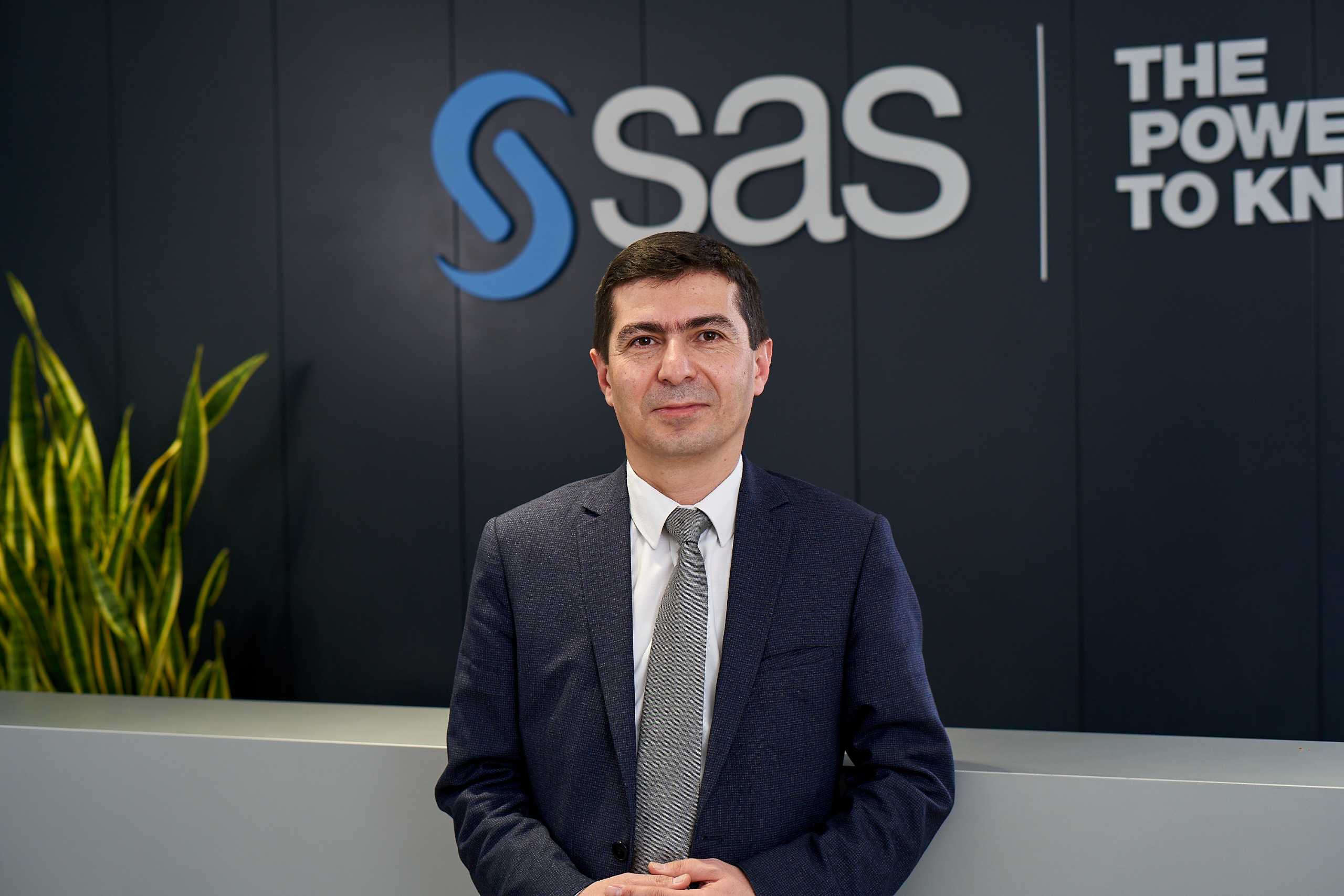
Rasim Eğri, General Manager of SAS Türkiye and Central Asia, said: “Companies in Türkiye are demonstrating significant innovation capabilities by moving beyond experimentation and pilot projects and integrating AI directly into revenue-generating production processes. However, several important challenges remain. Governance, auditing and data quality must no longer be treated as issues to address only when the need arises; they must become integral parts of organizational culture. As companies begin using autonomous AI agents capable of making decisions and taking actions independently, insufficiently monitored systems and unexplained decisions can quickly put the commercial gains achieved to date at risk. Our priority must therefore be to strengthen auditing, data quality and accountability mechanisms.”
The report highlights three critical realities for businesses.
AI That Cannot Explain Its Reasoning Is a Serious Source of Commercial Risk
Researchers found that employees are becoming increasingly cautious about systems that fail to deliver accurate outputs or explain how decisions are made. As AI becomes more autonomous, explainability is becoming increasingly critical.
The report also examines one of the biggest barriers to AI adoption: employees’ lack of trust in AI decisions, which leads to manual interventions and corrections. This perpetuates the trust gap in AI decision-making and translates into losses in time, productivity and profitability for organizations. Since the quality of AI decisions can only be as good as the data on which they are based, establishing a strong data foundation is critical for organizations seeking to reduce manual intervention rates.
Key findings:
- 97.2% of users override AI-generated recommendations and intervene in at least some scenarios.
- Regardless of whether an output is considered correct, the leading reason employees intervene in AI decisions is the system’s inability to explain the reasoning behind its decision.
- Trust levels decline from 76% for generative AI to 66% for agentic AI, highlighting growing concerns as systems become more autonomous.
- In Türkiye, nearly half (47.1%) of employee corrections to AI outputs result from insufficient explanations. A further 27.5% of corrections are due to inadequate consideration of business context, while 9.8% stem from factual errors.
Trustworthy AI Practices Drive Commercial Success
The report shows that the gap in ROI from AI is widening, suggesting that organizations extracting the greatest value from AI are not necessarily using different technologies but are managing AI in a fundamentally different way.
Key findings:
- Organizations investing in trustworthy AI practices are 15 times more likely to report strong or high ROI from their AI projects (62% versus 4%).
- Organizations with the strongest trustworthy AI practices achieve 1.85 times greater gains across 13 different business outcomes, including revenue growth, cost savings and customer experience.
- 85% of organizations leading in trustworthy AI practices are increasing their investments in this area by more than 10% this year, further widening the performance gap.
In Türkiye, 32% of businesses report achieving strong or high ROI from AI. Improvements were recorded over the year in four of the five key dimensions. Explainability, Model Governance and Data Quality contributed most to this progress, while Responsible AI Policy saw a slight decline. The only area in which sufficient progress was not achieved during the same period was Audit and Accountability.
Many Organizations Are Losing Time and Money Due to Weak Data Foundations
Many organizations are deploying AI on data and infrastructure that are underdeveloped or outdated. This limits their ability to govern AI effectively and realize value from their investments.
Key findings:
- Only 17.5% of organizations have a fully optimized data infrastructure that has reached the maturity level required for agentic AI. This shortfall negatively affects performance.
- Organizations with optimized data infrastructure are four times more likely to expect strong ROI from their AI projects. They are also six times more likely to mandate the data quality and explainability controls needed to build trust.
- Although Türkiye’s Trustworthiness Index has risen to 60.8 points, data quality remains the weakest dimension in the market, scoring 6.4 points below the global benchmark. Only 1.9% of companies require data quality as a mandatory criterion for every project. Meanwhile, investments in regular audits and impact assessments have fallen to 17%, indicating that significant shortcomings remain.
Industry Analysis: Banking Takes the Lead in Governance
The findings are based on a global survey of 2,699 decision-makers who are knowledgeable about or influence their organizations’ data and AI initiatives. Conducted across 28 countries and four sectors—banking, insurance, life sciences and government—the study provides industry-specific use cases and insights into how business leaders approach AI across different sectors.
Key findings:
- Banking leaders are moving beyond regulatory compliance, treating robust AI governance as an operational necessity and a competitive advantage. 85% of leading banks have established governance frameworks, compared with just 29% of organizations that lag behind.
- 41% of public-sector leaders plan to increase their investments in trustworthy AI by more than 20% over the coming year, putting the sector on par with those setting the most ambitious investment targets.
- 23% of life sciences organizations have scaled AI across their enterprises, the highest proportion among all sectors included in the study.
Access all the research findings and the full report [here].
Banner Inside Article - 728x90