




Hisense in Türkiye: Separate the RGB MiniLED showcase from the TVs you can buy
TV Systems
Hits: 4
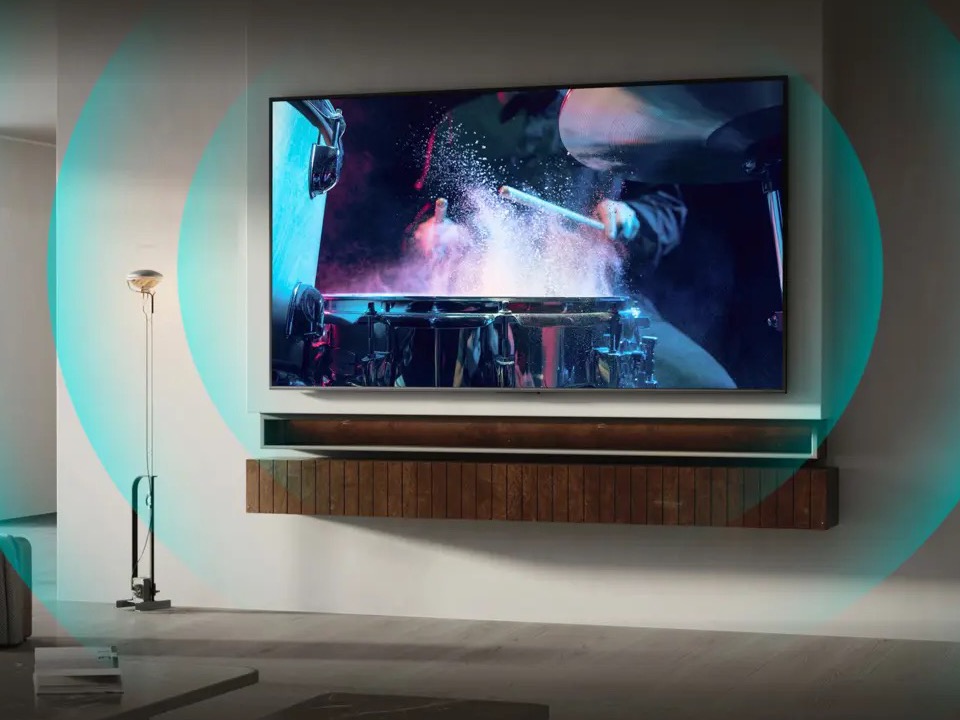
A photograph of a giant screen does not tell the whole story of Hisense’s Turkish television strategy. On one side are RGB MiniLED models demonstrating the brand’s technology ambitions. On the other are the Hi-QLED and ULED MiniLED families that buyers can compare in the local catalogue. Separating the two makes the product positioning, and the competition with brands such as TCL, much clearer.
The Turkish event took place in Istanbul on 7 October 2026. October coverage described the 116-inch 116UXQ and the UR8 and UR9 series on display, alongside a plan to sell televisions larger than 100 inches in Türkiye from 2027. A television appearing on stage should not automatically be treated as available in local stores. This article is a technology and buying analysis based on launch coverage and official Turkish product pages, not a test report.
First, read the names correctly
“Mini OLED” is not the correct term here. OLED uses light-emitting pixels. Mini LED is an LCD backlighting approach built around smaller light sources and more precise control. Hisense’s RGB MiniLED, ULED MiniLED and Hi-QLED labels are not interchangeable descriptions of the same product.
RGB MiniLED addresses colour at the backlight level by controlling red, green and blue light sources independently. Hisense’s official 116UX explanation describes this three-colour architecture. That does not mean every Hisense television listed in Türkiye has an RGB backlight. Generations and regional variants also differ, so specifications from an overseas model should not be transferred directly to a Turkish one.
What does the Turkish catalogue distinguish?
The official Turkish catalogue checked on 8 November includes E7S, E7S Pro, E8S and U7SE names. It identifies E7S as Hi-QLED at 60 Hz, E7S Pro as Hi-QLED at 144 Hz, and E8S and U7SE as ULED MiniLED. A small suffix can therefore point to a meaningful difference in intended use.
| Example in the Turkish catalogue | Display family | Important distinction |
|---|---|---|
| 55E7S | Hi-QLED, 60 Hz | Do not confuse it with the higher-refresh Pro model |
| 55E7S Pro | Hi-QLED, 144 Hz | A 144 Hz label does not itself mean MiniLED |
| 65E8S | ULED MiniLED, 144 Hz | Consider light control alongside the model’s audio equipment |
| 55U7SE | ULED MiniLED, 144 Hz | Check the source device and the chosen HDMI input |
This is not a price or quality ranking. Exact model codes and screen sizes matter; every specification should not be assumed to apply across an entire family.
Sport and gaming require more than hertz
Hisense Türkiye’s 55U7SE specification page lists a 144 Hz panel, Dolby Vision IQ and 144 Hz VRR on specified HDMI inputs. The 55E7S Pro page also lists 144 Hz and Dolby Vision IQ. These describe format and connectivity options; they are not a complete guarantee of motion quality.
In a football broadcast, trails around the ball, judder during horizontal camera movement and the preservation of grass texture involve different aspects of processing. A low-quality source looks more visibly flawed on a large screen. Excessive sharpening may produce artificial edges rather than detail. Motion interpolation should also be adjusted to taste: one setting does not necessarily suit both sport and cinema.
For gaming, the next question is which resolution and refresh rate your console or PC will actually output. The capabilities of individual HDMI sockets matter as much as their number. Consider which ports remain available after connecting an eARC sound system, rather than discovering the limitation after installation.
Strong colour is not necessarily accurate colour
The ability to reproduce a wide range of colours is valuable. Showing skin, sky and neutral grey correctly is a separate question. A highly saturated demonstration image may become tiring during a long film at home. Excessive contrast can erase delicate tonal transitions in a photograph or turn the texture of a dark jacket into a solid black patch.
It is useful to examine familiar photographs, natural faces and small bright objects against darkness instead of relying entirely on promotional video. Subtitle viewers should look for halos around lettering and whether dimming suppresses bright detail. The MiniLED label does not mean every model behaves the same way.
Where does competition with TCL happen?
The comparison cannot be reduced to “which is brighter?” TCL’s SQD approach and Hisense’s RGB MiniLED approach emphasise different routes to colour production. But a useful shop-floor comparison must involve locally available models, similar screen sizes and comparable prices. Matching an enormous RGB showcase model against a more affordable rival television can mislead a buyer.
Reflection handling and adequate brightness matter during daytime viewing. Black levels and shadow detail become more important for evening cinema. Gaming adds input lag and connectivity to the list. Seating also matters: it is easy to check in a store how much colour and contrast change when viewed from the side.
A final check before buying
Hisense’s arrival adds choice in Türkiye, but a purchase should not be based only on international exhibition headlines. Verify the selected model’s Turkish warranty, local service access, the availability of your preferred apps in VIDAA and actual retail conditions. A launch schedule is not a stock guarantee.
The sound approach is to define your needs, verify the exact model code and then assess the picture with real content. An impressive RGB MiniLED technology showcase and a locally available ULED MiniLED or Hi-QLED television meeting your needs are two different propositions. Choosing well begins by keeping them separate.
Sources and method
Hisense Türkiye catalogue: https://tr.hisense.com/products/tv/c/hisensetv01
Hisense 55U7SE: https://tr.hisense.com/urunler/tv/uled-miniled-tv/TV-SET-55U7SE-HSN/p/000000000020018749
Hisense 55E7S Pro: https://tr.hisense.com/urunler/tv/hi-qled-tv/TV-SET-55E7S-PRO-HSN/p/000000000020018408
Hisense 65E8S: https://tr.hisense.com/urunler/tv/uled-miniled-tv/TV-SET-65E8S-HSN/p/000000000020018824
Hisense RGB MiniLED explanation (US model; not substituted for a Turkish model): https://www.hisense-usa.com/post/hisense-debuts-116-inch-ux-tv-with-rgb-miniled-for-stunning-color-precision
CHIP, 10 October 2026, on the Turkish event: https://www.chip.com.tr/haber/hisense-televizyon-ve-klima-modelleriyle-turkiye-pazarina-giris-yapti_184482.html
Checked on 8 November 2026. These products were not laboratory-tested by us. Technical details are manufacturer statements; viewing advice is editorial analysis.
Dji Banner Inside Article - 728x90



