



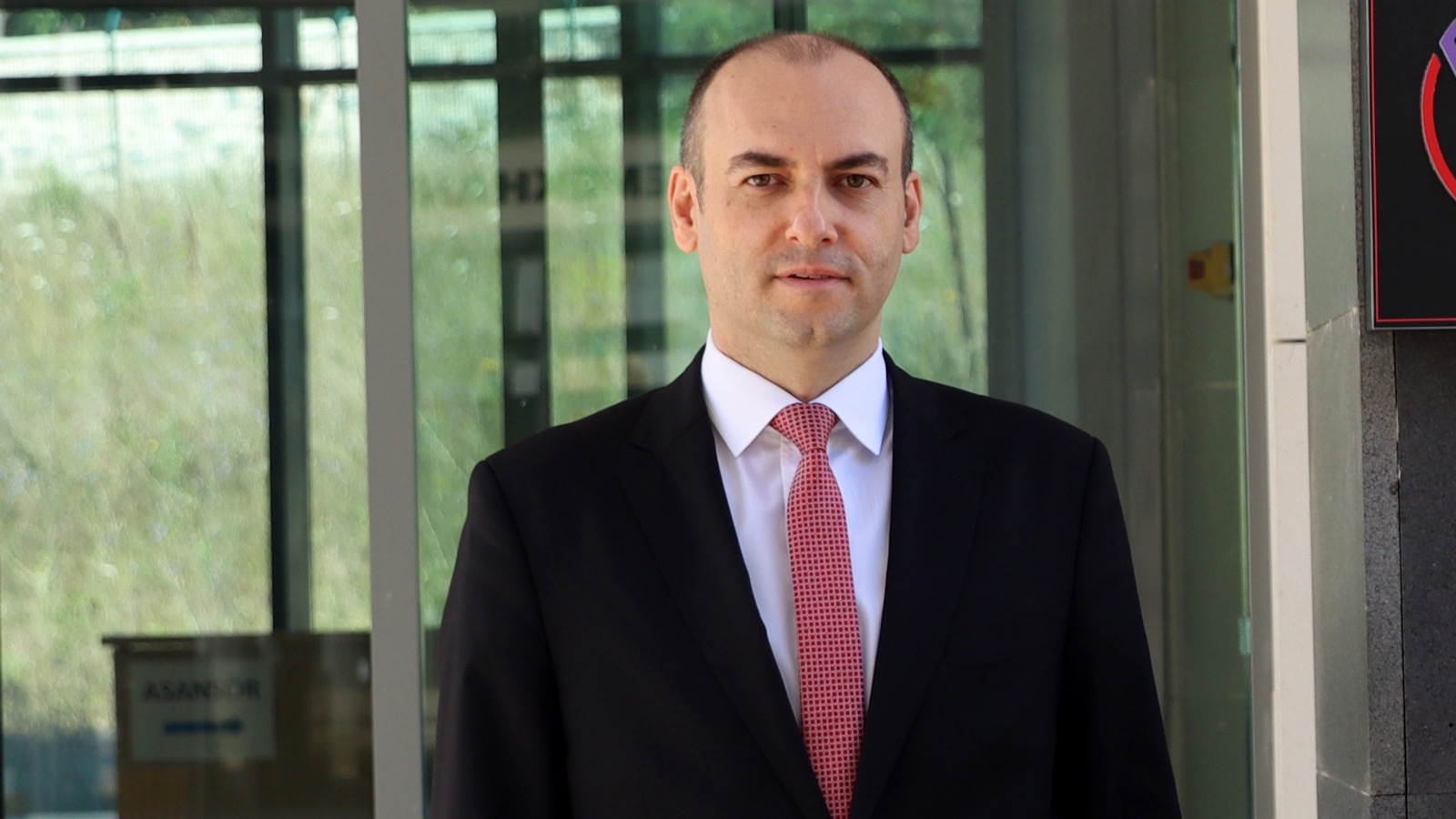

Şenol Vatansever, President of the Global Informatics Association (BİDER), reviewed the 12-day programme of COP31, which opens in Antalya today, and identified five areas that Türkiye and the business community should watch closely. From food, water and health to the energy transition, climate finance and carbon markets, urban transformation, artificial intelligence, green industrialisation and new technology investments, he said the COP31 agenda will shape not only climate policy but also the investment, production and competitive conditions of the years ahead.
Dji Banner Inside Article - 728x90

ISTANBUL — The United Nations Climate Change Conference, COP31, opens today at the Antalya EXPO Center.
Running from 9 to 20 November, the conference begins with a thematic day devoted to Food, Agriculture and Health. Its 12-day programme continues with energy and transport, zero waste, resilient cities, finance and trade, education and skills, science, industry and technology, nature and land use, human and social development, and strengthening implementation. The final day is reserved for the closing negotiations.
Şenol Vatansever, President of the Global Informatics Association (BİDER), said it would be a mistake to regard COP31 as a conference only for organisations concerned with environmental and climate policy.
“When we look at the COP31 programme, we see almost every fundamental issue facing the modern economy. A wide-ranging transformation agenda is coming together in Antalya, from food and water to energy, from finance to industry, and from cities to artificial intelligence. We should therefore view COP31 not simply as an environmental summit, but also as a platform with direct implications for investment, technology, production and competitiveness in the coming years.”
1. Food, water and health: Climate change at its closest to daily life
COP31’s first thematic day is devoted to agriculture and food security, irrigation and water efficiency, food systems, and the effects of climate change on health.
Vatansever said opening the conference with these subjects demonstrates how directly climate discussions relate to people’s everyday lives.
“Climate change is often discussed in terms of carbon and energy. Yet for ordinary people, some of its most immediate consequences concern food, water and health. Agricultural productivity, the proper use of water, reducing food losses and preparing health systems for extreme weather are directly economic and social issues.”
He noted that technology is becoming increasingly important in each of these areas, with applications ranging from sensors and satellite data to AI-assisted irrigation and early warning systems.
“Rather than watering an entire field with the same quantity of water, we can use data to measure the actual needs of the soil and crops, and supply the right amount at the right time. This is precisely one of the areas where technology and climate policy meet in practical terms.”
Implementation, carbon markets and climate data on the agenda from day one
The first day’s official negotiating programme includes a working session on financial and technical support for developing countries’ reporting and capacity-building needs under the Paris Agreement, alongside a briefing on the Global Implementation Accelerator.
The Article 6.2 Ambition Dialogue, addressing cooperative approaches between countries under Article 6.2 of the Paris Agreement, also takes place on the first day.
The same day includes technical sessions on the social and economic effects of countries’ climate policies, as well as Earth Information Day 2026, covering global climate observation systems, early warning systems and access to climate data.
Vatansever said even the opening-day programme reveals the direction of COP31:
“Implementation, financing, international carbon-market cooperation, economic effects and climate data are on the same agenda from the very first day. This shows us that climate policy is no longer confined to announcing targets. How a target is implemented, how it is financed and which data are used to measure the result will become increasingly important.”
2. Energy: The challenge is transforming the system, not just generating electricity
COP31’s second thematic day, on 10 November, focuses on Energy and Transport, including energy supply security, electrification, grid infrastructure, energy diversification and efficiency, and sustainable transport.
Vatansever said the energy transition should not be understood merely as installing additional electricity-generating capacity.
“If you are expanding electric vehicles, industrial electrification, data centres and new digital infrastructure at the same time, generating more electricity alone is not enough. The grid, storage, flexibility and energy management must develop together.”
He said the variable output of renewable sources is making battery systems, forecasting software, smart grids and digital energy management increasingly important.
“As AI grows, energy and technology policy will move closer together”
Vatansever said the rapid expansion of artificial intelligence and data centres is also creating a new equation for energy policy.
“We can no longer discuss artificial intelligence purely as software. Behind it are processors, data centres, cooling systems and electricity infrastructure. On the one hand, we will use AI to manage energy systems more efficiently. On the other, we will have to manage AI’s own energy consumption.”
For that reason, he said access to clean energy, data-centre efficiency and the energy performance of computing infrastructure will increasingly influence competitiveness in the technology sector.
3. Finance, trade and carbon markets will move further up the corporate agenda
The fifth thematic day, on 13 November, focuses on Finance and Trade, including the green transition, climate-related investment, green finance, value chains and carbon markets.
Vatansever said the business community in particular should follow this part of the programme closely:
“Carbon is no longer simply an environmental indicator in a sustainability report. It is becoming an economic variable that can influence energy costs, investment decisions, exports, access to finance and supply chains.”
Highlighting the importance of accurate measurement and verifiable data for reliable carbon markets, he continued:
“Carbon markets rest on measured, reported and verified emissions data. The carbon economy therefore also requires a strong data infrastructure. Measurement, reporting, verification and digital traceability will become more prominent on companies’ agendas.”
“Climate finance is not only a question of how much money is available”
Vatansever said one of the main challenges for climate finance, especially in developing countries, is bringing capital together with investable projects. Turning targets into viable projects is crucial.
“A country’s climate target does not create investment on its own. Projects need technical feasibility studies, defined permitting processes, a financing model and the capacity for implementation. Closing the gap between financing and viable projects is one of the most important challenges in the climate transition.”
He added that connecting technology companies’ solutions for energy, water, carbon, waste and efficiency with funding sources more effectively could help create new markets.
4. Cities and buildings offer a major field for technological transformation
COP31’s thematic agenda on 12 November will focus on Resilient Cities and the Built Environment.
The day’s official themes include climate-friendly buildings, settlements and urban resilience, disaster risk management, local government, smart cities, nature-based solutions, smart mobility and infrastructure.
Vatansever said preparing cities for climate change also represents a major area of transformation for the technology sector.
“We should not think of smart cities only as the digitisation of traffic lights or municipal services. Detecting water losses, early warning systems for extreme weather, building energy management, disaster risk modelling and optimising transport systems are now different parts of the same digital transformation.”
He said buildings could increasingly evolve from structures that merely consume energy into components of manageable energy systems.
“If you can use sensors and software to manage a building’s heating, cooling and lighting according to its actual needs, you can achieve significant energy savings. Building technologies and the IT sector are intersecting more and more.”
5. Science, industry and technology day is especially important for Türkiye
COP31’s eighth thematic day, on 16 November, will focus on Science, Industry and Technology.
The official programme includes science, green industrialisation, technology and innovation, SMEs, digitalisation, artificial intelligence and low-carbon production.
Vatansever described this as one of the most significant parts of the COP31 programme from BİDER’s perspective:
“Many of the subjects to be discussed on 16 November are directly connected to industrial competitiveness in the years ahead. A country’s ability to produce with lower carbon emissions, use energy efficiently, integrate AI into production and develop its own clean technology is now part of its competitive strength.”
He said technology companies should not treat climate policy as an issue outside their own sector.
“The green and digital transitions meet inside the same factory”
Vatansever identified industry as one of the clearest examples of the intersection between climate and technology:
“If you want to reduce a factory’s carbon emissions, you first need to measure its energy consumption. Measuring energy requires sensors and software; optimising production requires data analytics; and monitoring the supply chain requires digital systems. The green transition and the digital transition now meet inside the same factory.”
For this reason, he said cooperation between technology companies, industrial businesses, energy companies and financial institutions will become even more important.
Antalya Leaders’ Summit on 11–12 November
The Antalya Leaders’ Summit will take place as part of COP31 on 11 and 12 November, hosted by President Recep Tayyip Erdoğan.
Its main theme is “Towards a Sustainable, Resilient and Equitable Future”.
Four high-level roundtables are planned: on 11 November, clean energy transition and electrification, and global green industrialisation; on 12 November, accelerating implementation in the Paris Agreement’s second decade, access to finance, and adaptation and urban resilience.
Vatansever said messages delivered at leaders’ level matter for long-term investment decisions:
“Major energy and infrastructure transitions require investments spanning many years. For investors, political commitment, regulatory stability and long-term policy predictability can become as important as the technology itself.”
COP31’s second week also deserves close attention
After the science, industry and technology agenda on 16 November, the second week turns to oceans, seas, nature and land use on 17 November, followed by human and social development on 18 November.
On 19 November, “İmece: Strengthening Implementation” will address institutional and technical capacity-building, investment-ready projects and access to finance.
20 November is reserved for the Final Negotiations.
Vatansever said the theme of “İmece”, a Turkish tradition of collective effort, aligns with COP31’s emphasis on implementation:
“Political will alone is not enough to implement a climate target. Technical capacity, human resources, financing and an investment-ready project portfolio must develop together.”
“The real outcome for Türkiye will emerge after 20 November”
Vatansever concluded:
“The opening of COP31 in Türkiye is an important diplomatic development. But the summit’s real value for Türkiye will not be determined solely by how many leaders attend or how many meetings take place.
“Over the next 12 days, discussions will cover a wide-ranging agenda directly affecting the future of the global economy, from food and water security to energy, from financing to carbon markets, and from cities to artificial intelligence.
“After the conference, important considerations for Türkiye will include the investment connections established, the technology partnerships developed, the new international networks accessed by Turkish companies and the projects that secure financing.
“Türkiye has a strong industrial base, a growing energy sector, significant engineering capabilities and technology entrepreneurship potential. We believe COP31 offers an important opportunity to connect this capacity with clean technologies, green finance and new export opportunities.
“In Antalya, we will be talking about the climate. But in fact we will also be talking about the energy system, industrial competitiveness, cities, financing models and technology of the years ahead.”
Source: Global Informatics Association (BİDER) press release


