




NOAA confirms G1 geomagnetic storm conditions on November 7–8
Automation
Hits: 2
The US National Oceanic and Atmospheric Administration recorded G1 geomagnetic storm conditions on November 7 and 8. G1 denotes a minor storm on NOAA’s five-level geomagnetic scale.
Two observations reached the Kp 5 threshold
The Space Weather Prediction Center’s ALTK05 alerts record the threshold at 19:45 UTC on November 7, 2026, and again at 02:03 UTC on November 8. In Türkiye, these correspond to 22:45 on November 7 and 05:03 on November 8. These are observation alerts, rather than forecasts that the threshold might be reached.
Potential effects are concentrated at high latitudes
NOAA lists weak power-grid fluctuations and minor effects on satellite operations among the possible impacts of G1 conditions. Aurora may also become visible at high latitudes. The alerts identify the primary impact area as poleward of 60 degrees geomagnetic latitude. They do not establish that electricity or communications outages will occur in Türkiye.
The G scale describes geomagnetic storms. NOAA uses separate scales for solar radiation storms and radio blackouts, so a G1 observation alone does not establish that these other space-weather events are occurring simultaneously.
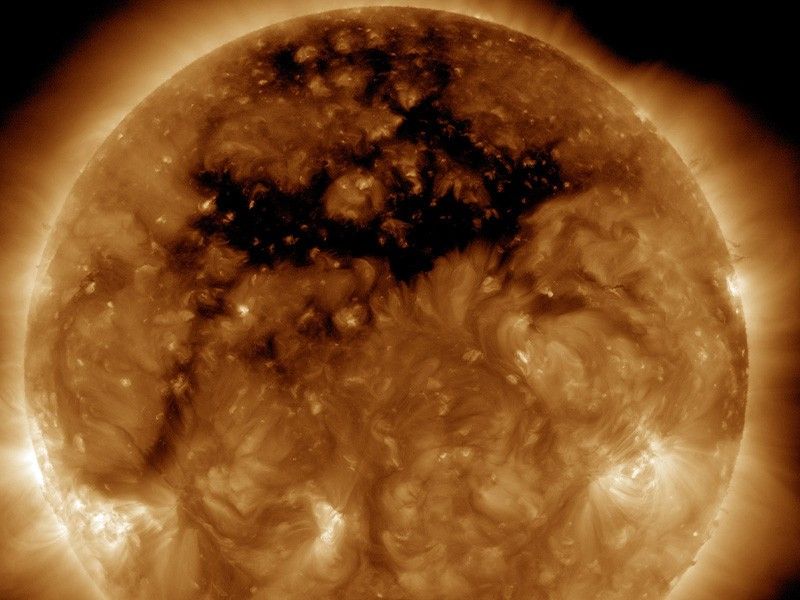
Image note: The article image is a NASA/SDO archival view of a coronal hole captured on October 10, 2015. The homepage hero is a contrast-enhanced solar image from NASA Goddard’s 2012 Gradient Sun collection. Neither depicts the November 2026 event. Image credits: NASA/SDO and NASA’s Goddard Space Flight Center.
Sources: NOAA observation alerts; NOAA Space Weather Scales.


