



Medium TK: Private notes, shared drafts and an AI-assisted writing space
Software
Hits: 4
Medium has introduced TK, a writing app built around everyday notes, unfinished ideas and small groups of readers rather than only finished public articles. It combines note-taking, journaling and draft sharing, with AI positioned as help for research, feedback and finding material in a personal archive instead of replacing the writer.
Not every note needs an audience immediately
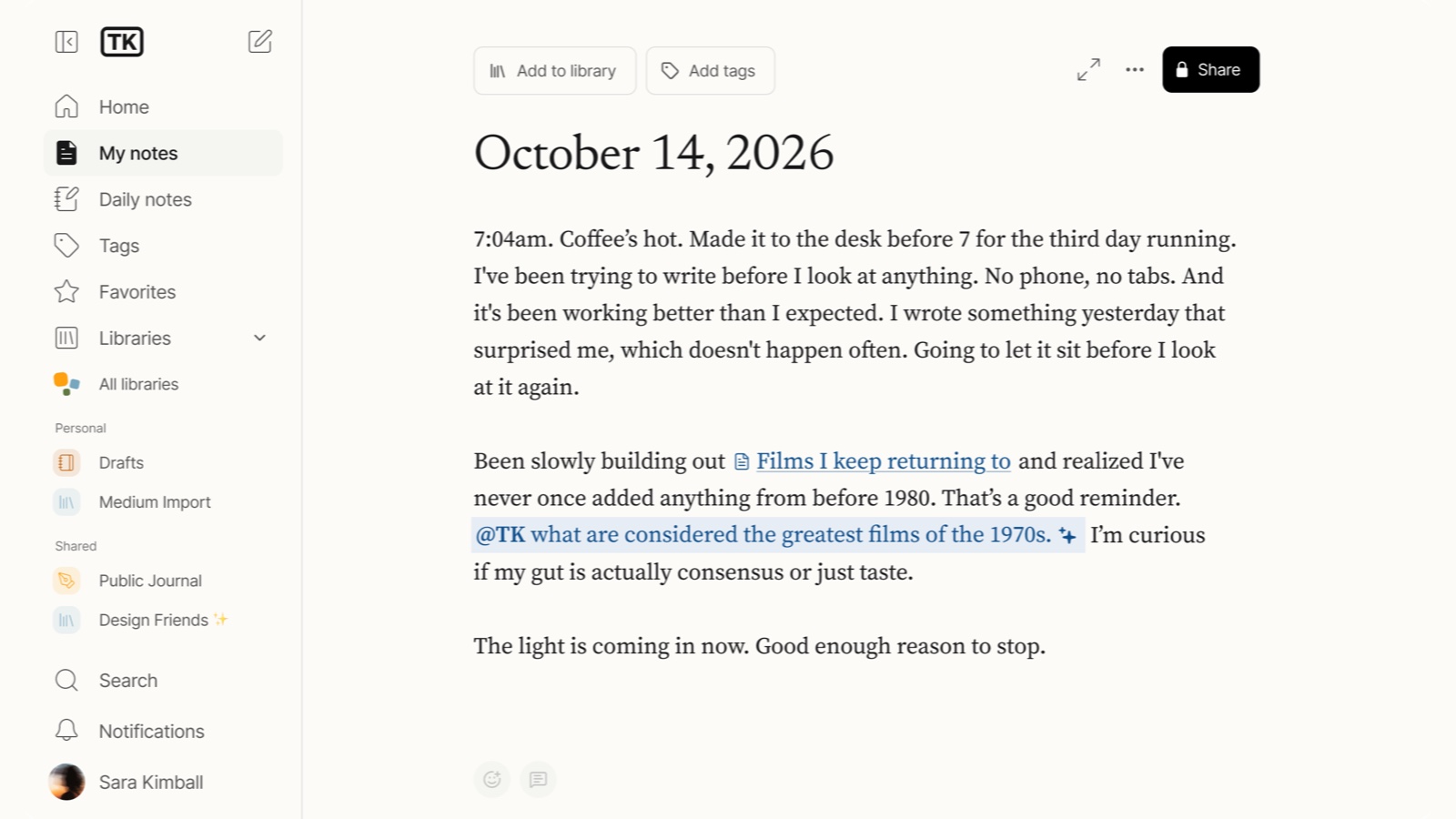
TK starts with the idea that thoughts can be worth saving before they become polished prose. Users can capture a few lines, return to an unfinished piece or keep a journal. A new writing prompt each morning is intended to encourage a regular habit. Medium says users do not need to organize everything in advance: search and organizational tools can help them find and develop fragments afterward.
Sharing is a separate decision. A rough draft can go to a few trusted readers or into a “library,” a small group whose members might exchange blog drafts, write morning pages or work on books. That creates a space between a completely private notebook and public publishing, without requiring every early thought to appear on a public profile.
What the name means
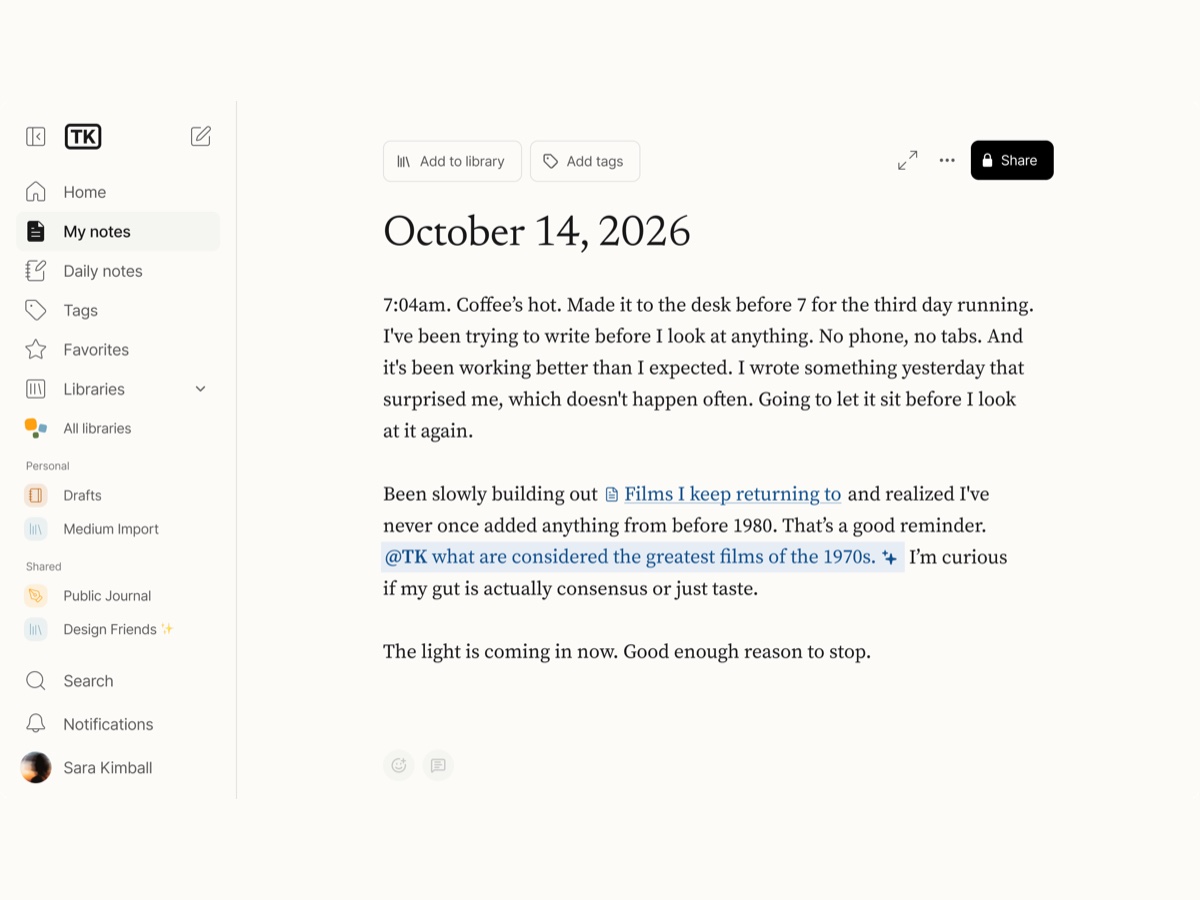
In publishing, TK means “to come,” a placeholder for a missing fact or wording that will be completed later. The app turns that convention into an interaction. A writer can leave an @tk request for a missing detail, such as the year a law passed, and continue writing while the assistant looks it up.
That does not eliminate the need to check the underlying sources. Dates, figures and quotations still deserve scrutiny before publication. An assistant’s ability to retrieve an answer should not be confused with a guarantee that every answer is correct.
Where AI enters the workflow
Medium says TK is not designed to write an essay on the user’s behalf. Inside the editor, the assistant can look up information, retrieve an earlier note or help when an idea stalls. Before sharing a draft, writers can request feedback on its structure or another opinion on a headline. In the archive, the emphasis is on organizing, summarizing and rediscovering material already written.
The official help pages identify Anthropic’s Claude models as the engine behind the assistant. When someone uses it, relevant portions of notes and the conversation are sent to an AI model. Semantic search uses Voyage AI to process notes and queries. “Private notes” therefore should not be interpreted as a promise that all processing happens exclusively on the user’s device.
What the privacy promises cover
TK says it does not train AI models on users’ writing and that the services it relies on have agreed not to do so either. According to its explanation, assistant requests are routed only to providers that agree not to retain the data after answering. Voyage AI is also said not to store notes or use them for training. These are the provider’s published data-handling commitments.
For web lookups, TK says only the search query is sent to the search service, never the contents of the user’s notes. The assistant can read the user’s own notes, material shared with them and notes in libraries they can access. It cannot open material the user could not open. AI conversations are saved in the TK account so they can be revisited, and are included in data exports.
The assistant is optional. Private notes are not sent to the assistant’s model when it is not used. Shared notes are different: people who can read them can ask their own assistants about them. Some automatic features, including the daily writing prompt and daily-note template, can be disabled in settings. Semantic search is part of the search system and cannot be switched off separately.
Accounts and plans
TK uses a Medium account rather than a separate password. Writing remains separate from the user’s Medium profile unless they choose to publish it there. The landing page describes a free start with a Medium account. An older early-access help page, updated on October 21, describes entry through Medium membership or an invitation from an existing user. Users should therefore check the access offered at sign-in rather than assume that every access condition is identical.
The same help page says core functionality is the same across plans, with differences in the amount of AI assistance. Friend of Medium members receive the full plan, including more AI assistance, unlimited invitations and early access to new features. Other users are placed on a Limited plan with a smaller monthly AI allowance. The landing page’s free wording should not be read as unlimited AI usage.
Mobile access
The mobile help page links iPhone users to TestFlight and Android users to Google Play. The iPhone link indicates beta distribution through TestFlight rather than an ordinary App Store release. The broader proposition is a writing space that lets people develop ideas privately and share them with a chosen audience when ready. Publishing a public blog post is an option, not a compulsory starting point.
Sources: TK official website, TK privacy explanation, TK access and plans, TK mobile guidance.
Dji Banner Inside Article - 728x90



