




James Barnor to receive Sony World Photography Awards 2027 honour
Events
Hits: 18
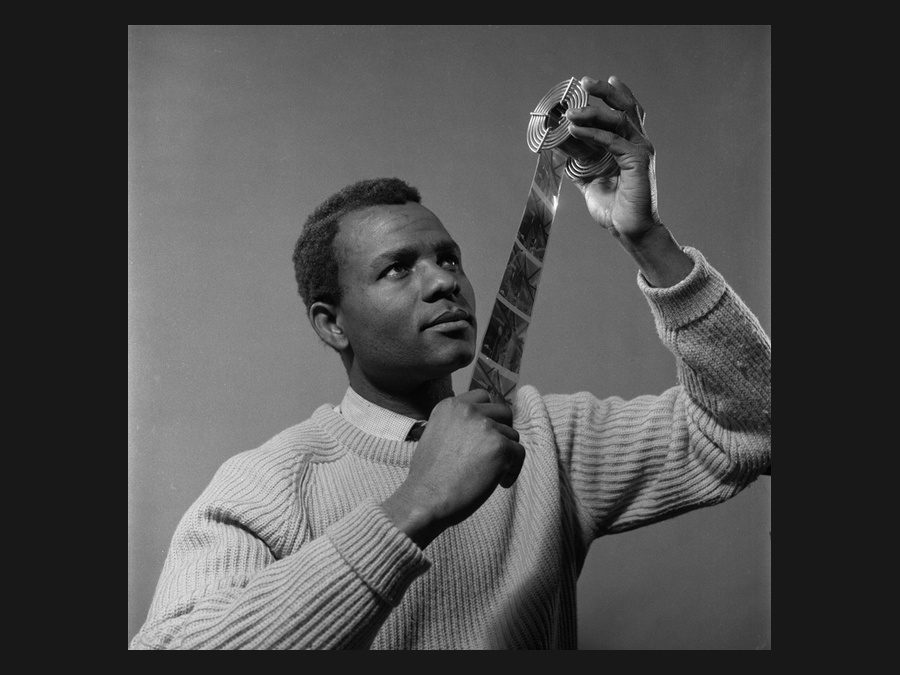
Cover: James Barnor, Medway College, Rochester, c.1960–1963. © James Barnor / Courtesy Galerie Clémentine de la Féronnière.
Ghanaian photographer James Barnor has been named the recipient of the Sony World Photography Awards 2027 Outstanding Contribution to Photography title. Selected for the programme’s 20th edition, Barnor brings together a career spanning photojournalism around Ghana’s independence, portraits of social life in Accra and London, fashion photography and the development of colour-photography laboratories.
The award will be presented at the annual London gala on April 15, 2027, when the overall competition winners will also be announced. A retrospective featuring more than 50 works will run at Somerset House from April 16 to May 3, 2027. Sony’s international announcement was dated November 5; the Turkish press release was circulated on November 16.
A visual record connecting Accra and London
Barnor is particularly associated with portraits made from the 1950s through the 1970s, recording Black social life, style and everyday relationships. Working in his Ever Young studio, on Accra’s streets and in central London, he focused on the character and identity of his subjects. Together, the photographs form a record of people experiencing substantial social change.
Born in Ghana in 1929, Barnor began learning photography alongside his cousin, portrait photographer J. P. D. Dodoo. In 1950 he became the first staff photographer of the newly established Daily Graphic, published in Ghana by London’s Daily Mirror Group. He covered rallies, street processions and events including Kwame Nkrumah’s declaration of independence, documenting the people living through Ghana’s transition to independence in 1957.
In 1953, he opened Ever Young in Jamestown, Accra. Students, shop workers, traffic police, judges and political figures were among his subjects. Their portraits offered a broad view of a society preparing for independence and redefining its identity.
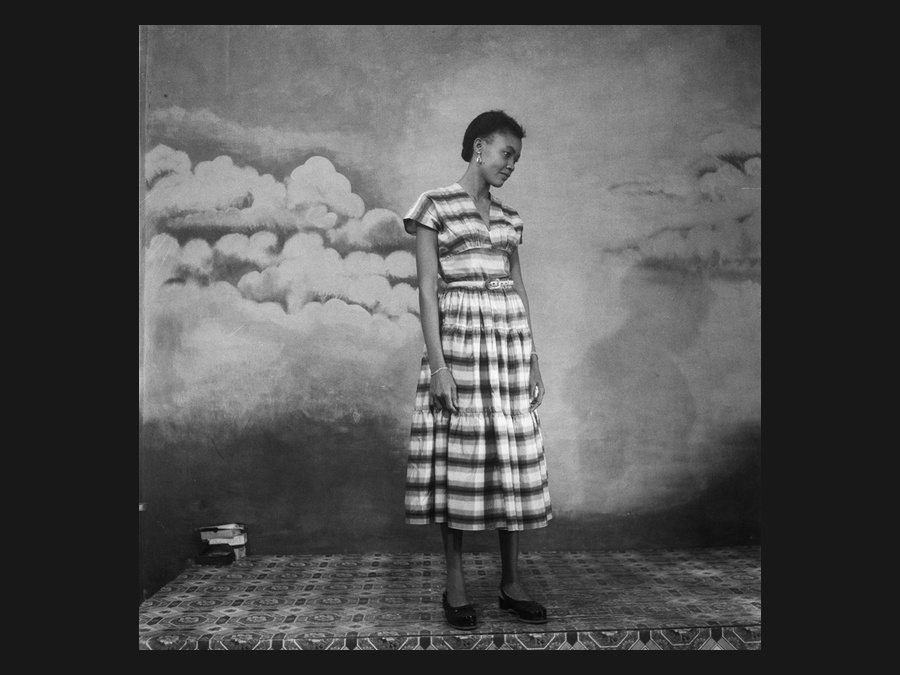
Selina Opong, one of the first policewomen in Ghana, caught in a pensive pose, Ever Young Studio, c.1954–56. © James Barnor / Courtesy Galerie Clémentine de la Féronnière.
Colour photography and the Drum years
Barnor moved to the United Kingdom in 1959 to develop his technical knowledge. He studied at Medway College of Art in Kent before working as a colour-printing technician at Colour Processing Laboratories.
He also produced photographs for Drum, the South African magazine founded in 1951 and associated with opposition to apartheid. His portraits of Black models and prominent figures appeared on its covers and fashion pages. These images recorded the African diaspora in London and the culture of Swinging London, while becoming a point of reference for later photographers and artists.
About a decade later, following training with Agfa-Gevaert in Belgium and Germany, Barnor returned to Ghana as the company’s technical representative. He established the country’s first colour-photography processing laboratory, helping introduce the technology to new audiences. During approximately two further decades in Ghana, he worked independently through Studio X23, continued his photographic and journalistic practice, and undertook projects for public institutions in Accra.
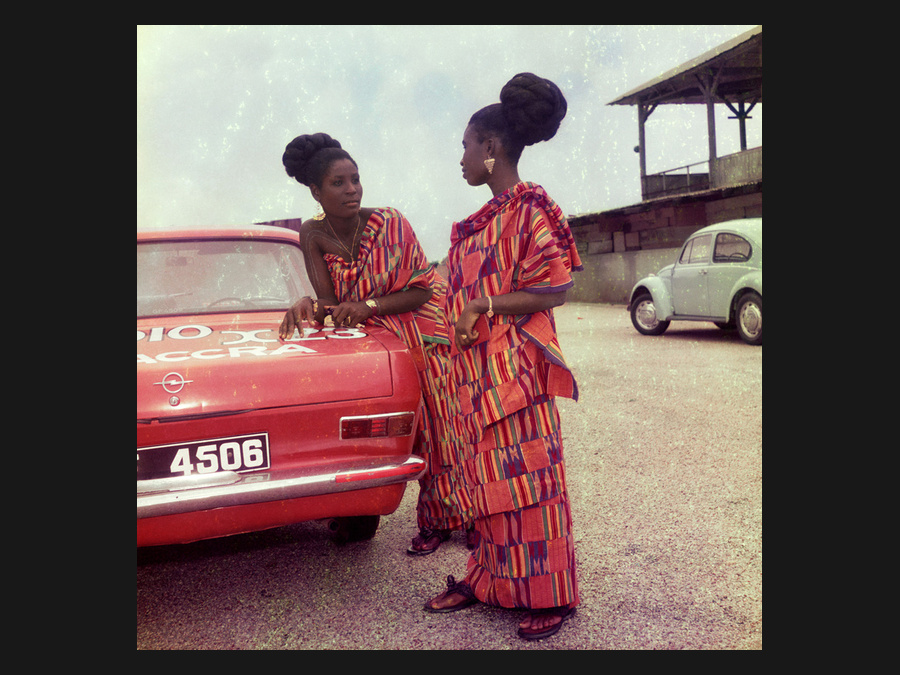
Two friends dressed for a church celebration with James’s car, Accra, 1970s. © James Barnor. Sony press material.
Photographs and archival material at Somerset House
The 2027 retrospective will follow Barnor’s journey from Accra to London, his training in colour photography and his return to Ghana. Alongside more than 50 works, documents and memorabilia will help explain the experiences and technical changes that shaped his practice.
Barnor settled in London in the early 1990s and continues to live in the United Kingdom, sharing his knowledge with younger photographers. In his response to the award, he emphasised the learning opportunities provided by growing up in a family of photographers. He recalled that, when opening his Accra studio, he could not have anticipated a journey through Ghana’s independence, London and back to Ghana. He described the camera as his lifelong companion and explained that continued learning has always been connected with passing knowledge on. He hopes the exhibition will encourage emerging photographers to remain curious, tell their own stories and share what they know.
International exhibitions and collections
A retrospective curated by Hans Ulrich Obrist was shown at the Serpentine in 2021, MASI in Lugano in 2022 and the Detroit Institute of Arts in 2023. Matthieu Humery curated “James Barnor: Stories, Pictures from the Archive (1947–1987)” at LUMA Arles in 2022. The James Barnor Award, established that year, supports African photographers.
“James Barnor, Studio of Life” opened at FOMU in Antwerp in 2023. The month-long James Barnor 95 festival took place in Accra and Tamale in May 2024 to celebrate his 95th birthday. His work subsequently appeared in MoMA’s “Ideas of Africa: Portraiture and Political Imagination” in 2025 and Ibrahim Mahama’s “Le Temps des Récoltes” at the Fondation Cartier pour l’art contemporain in 2026.
Institutions holding his photographs include MoMA, Tate, the Victoria and Albert Museum, the National Portrait Gallery, the Centre Pompidou, the Musée du quai Branly–Jacques Chirac, the Detroit Institute of Arts, the National Gallery of Art in Washington, DC, and Photo Elysée.
The awards’ 20th edition
The Outstanding Contribution to Photography title recognises influential contributions to the medium. Earlier recipients include Martin Parr (2017), Graciela Iturbide (2021), Edward Burtynsky (2022), Sebastião Salgado (2024), Susan Meiselas (2025) and Joel Meyerowitz (2026).
The Sony World Photography Awards are organised by the World Photography Organisation, Creo’s photography strand. Launched in 2007, the programme provides an international platform for established and emerging photographers. Winners receive Sony digital-imaging equipment and cash prizes, alongside the opportunity to exhibit at Somerset House. Selected work subsequently travels to exhibitions in other countries. The programme aims to support photographers’ career development and international visibility.
Through programmes and competitions, the World Photography Organisation supports photographic culture, opportunities for artists and discussion around their work. Its exhibitions attract tens of thousands of visitors. Creo works across photography, film and contemporary art; its projects also include the Sony Future Filmmaker Awards and PHOTOFAIRS. Founded as the World Photography Organisation in 2007, it subsequently expanded its activities. Working with Angus Montgomery Arts on additional initiatives, the organisation takes its name from the Latin for “I create”.
Sony Corporation is a wholly owned subsidiary of Sony Group responsible for Entertainment, Technology & Services. Its stated approach to building future entertainment experiences with creators includes the Japanese concepts Kando, associated with emotional impact, and Anshin, encompassing reassurance, reliability and trust.
Sources: Sony Türkiye press release; Sony international announcement; World Photography Organisation.
Dji Banner Inside Article - 728x90



