




BİDER urges COP31’s second week to turn climate goals into technology and investment
Clean Energy
Hits: 12
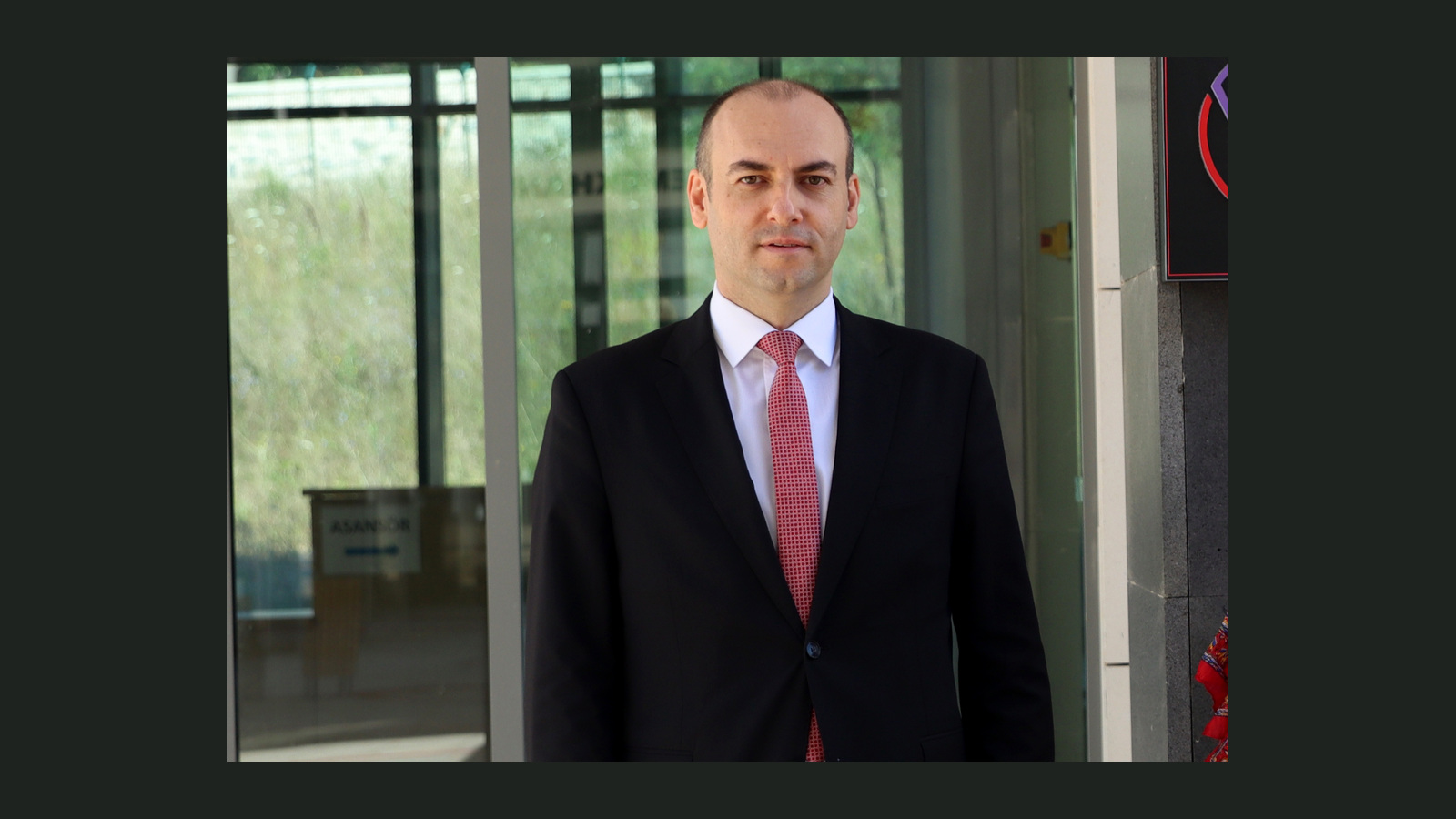
Şenol Vatansever, president of the Global Informatics Association (BİDER), says Türkiye’s priority in COP31’s second week should be turning climate targets into technology partnerships, investment and implementable projects. His November 16 assessment brings together the first week’s financing agreements and the November 16–20 agenda.
At the halfway point of the conference, which began in Antalya on November 9, UN Climate Change Executive Secretary Simon Stiell said nearly 200 countries were working across 165 separate negotiating mandates. His official November 14 remarks stressed that progress had been made but difficult issues still required resolution in the second week. The figure refers to negotiating tasks, not 165 completed agreements.
Ten financing agreements worth USD 5.1 billion
Vatansever says the first week made political direction, financing requirements and countries’ differing priorities clearer. He expects technology, industry, nature, social transformation, implementation capacity and final negotiations to take greater prominence in the second week.
The Presidency’s Directorate of Communications also records, in its November 12 COP31 Business Forum speech transcript, ten agreements worth USD 5.1 billion between Türkiye and the Asian Development Bank, Asian Infrastructure Investment Bank, World Bank and Islamic Development Bank. According to the bulletin, the packages cover green transformation, resilient infrastructure, industrial modernisation and business financing.
The BİDER president argues that conferences should not be assessed solely by attendance or speech counts. In his view, lasting value emerges when finance meets projects, technology meets industry and international cooperation leads to investment. He considers the first-week agreements important for precisely that implementation-focused reason.
AIIB’s USD 1.6 billion climate programme
The packages announced in the first week include AIIB’s USD 1.6 billion Climate Action Acceleration Programme for Türkiye. The bank’s official November 12 announcement describes it as its largest climate-focused policy-financing package to date. Supporting implementation of Türkiye’s Climate Law and second Nationally Determined Contribution, it combines a policy-based loan with supplemental financing of USD 800 million each.
The programme’s three pillars are sustainable finance, sectoral decarbonisation and climate resilience. The bulletin lists operationalising the emissions trading system, developing green-finance infrastructure, implementing sectoral emissions-reduction policies and strengthening resilience in water, ecosystems and health. Vatansever considers the integration of finance, legislation, carbon markets and sector policies as important as the package’s size.
November 16: science, industry and technology
The official thematic programme assigns the opening day of the second week to science, industry and technology. The BİDER release lists a high-level Green Digital Action roundtable on artificial intelligence, a ministerial roundtable on green industrialisation, a session on AI, digital twins and the Internet of Things in resilient cities, clean-technology capacity in the Global South and the launch of the AI Enabled Cleantech Initiative.
Vatansever argues that energy efficiency, lower-carbon production, grid management, water optimisation and forecasting climate risks all require data and technology. He regards this opening agenda as evidence that climate, industrial and technology policies are becoming increasingly interconnected.
AI’s benefits and energy demand should be measured together
The BİDER president highlights AI’s potential to improve grid and factory efficiency, climate forecasting and water use while accelerating development of clean technologies. He also notes that the same systems require substantial computing resources and data centres.
He therefore recommends accounting not only for emissions avoided but also for the electricity consumed by the system and the source of that electricity. Data-centre efficiency, cooling technologies, low-carbon power and energy per computing operation are increasingly important performance indicators for the IT sector in his assessment.
Green industrialisation and digital factories share an agenda
Referring to the November 16 ministerial roundtable, Vatansever says lower-carbon production in steel, cement, chemicals, aluminium and other energy-intensive industries is becoming an economic as well as environmental competitive factor. He describes green industrialisation as a global contest involving technology, capital, exports and new investment.
Seeing Türkiye’s manufacturing base as an advantage, he argues that digitalisation and decarbonisation should be addressed together. Measuring a factory’s energy and resource use requires sensors, software and data; optimising production requires analytics and AI; tracing supply chains requires digital systems. Two apparently separate transformation programmes consequently converge inside the same factory. Joint projects involving technology providers, energy companies, industrial businesses and financial institutions become more important.
Supply-chain requirements and skills for SMEs
Vatansever says the agenda is not limited to large companies. An SME may not participate directly in climate negotiations, but the transition becomes part of its everyday operations when a major customer requests information on energy consumption, product carbon footprints or supply-chain emissions. He sees efficiency, carbon measurement, digital traceability and low-carbon production capabilities as increasingly important for competitiveness within international supply chains.
November 17 and 18: nature and the social dimension
November 17 is devoted to Oceans, Seas, Nature and Land Use – Rio Synergy. Topics include marine ecosystems, coastal resilience, biodiversity, forests, land use and ecosystem restoration. Vatansever highlights satellite technology, sensors, geographic information systems and AI as tools for monitoring water resources, detecting forest fires early, tracking coastal changes and managing agricultural land.
November 18 is Human and Social Development day. The bulletin also identifies a high-level UNFCCC event on the participation of women, girls, men and boys in socially just transition processes. Vatansever says new technology changes the content of jobs while creating occupations and skill requirements, making preparation of the workforce essential. Buying technology alone is insufficient without developing people who can create, implement and use it.
İmece on November 19, final negotiations on November 20
The November 19 theme, “İmece: Strengthening Implementation”, focuses on the capacity needed to turn commitments into tangible outcomes. The BİDER president says announcing a target is easier than delivering it: technical capabilities, people, finance, technology and project development must work together. He calls for government, businesses, finance, academia and technology providers to participate in the same implementation ecosystem.
November 20 is allocated to final negotiations. The bulletin notes that many difficult issues remained unresolved after the first week and that a November 13 informal COP31 presidency assessment reflected differing positions. The subjects listed include the Paris Agreement’s 1.5-degree goal, the emissions-reduction gap, finance, adaptation, differing national responsibilities and how to express the energy transition. The note is treated as a summary of views raised during presidency consultations, not a consensus text.
Vatansever regards differences among nearly 200 countries as normal given their varied energy systems, development levels and financial capacities. The important task, he says, is to establish an implementable and strong common basis.
Success should be judged by implementation after the conference
The BİDER president wants Türkiye’s lasting gains to extend beyond successful hosting. He identifies new technology partnerships, clean-energy and industrial investment, new markets for start-ups and projects connected to finance as the desired results of relationships established in Antalya.
In his view, COP31 should be assessed not only by the text adopted on November 20 but also by subsequent projects, investment mobilised, technologies scaled and the pace of corporate transformation. Having discussed goals and resources in the first week, he describes the central second-week question as how to scale that transformation.
Source: BİDER press release, November 16, 2026. Additional verification: Directorate of Communications, UNFCCC, COP31 thematic days, AIIB.
Dji Banner Inside Article - 728x90



