




Samsung announces CES 2027 awards for Galaxy Z Fold8 devices and memory technologies
Samsung
Hits: 7
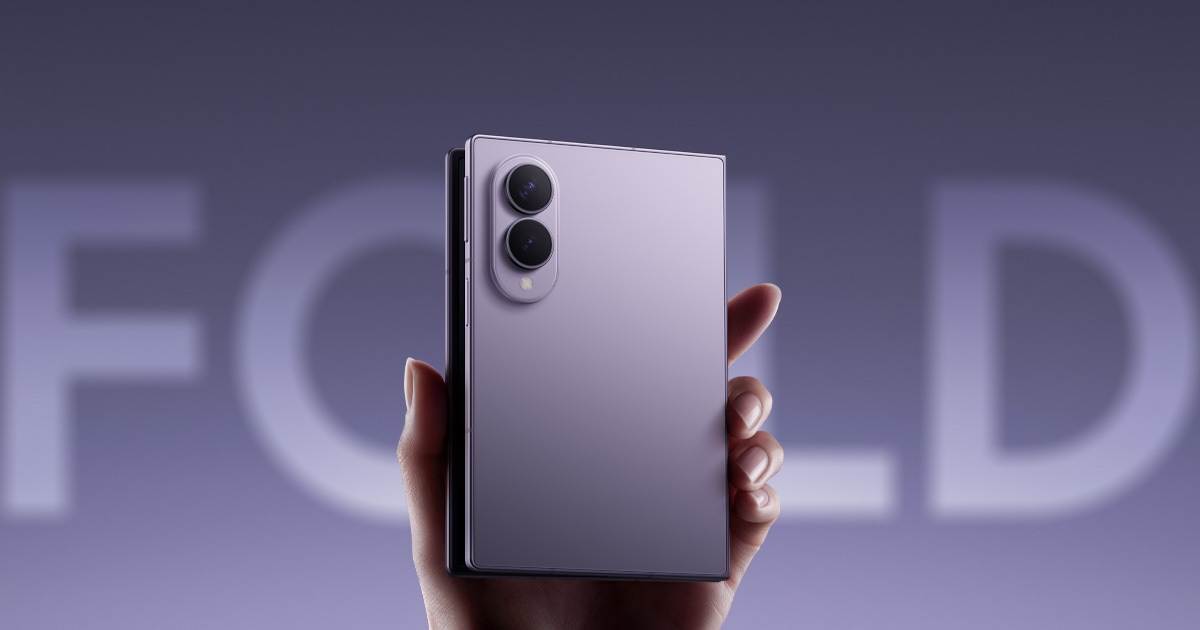
Samsung Electronics has announced CES 2027 Innovation Awards recognition across mobile devices, home entertainment, appliances and semiconductor technologies. The Galaxy Z Fold8 Ultra and Galaxy Z Fold8 received Best of Innovation awards in Mobile Devices, Accessories and Apps. Samsung says the number of its products receiving the top distinction doubled compared with the previous year.
Organised by the US Consumer Technology Association, the awards recognise design and engineering achievements in consumer technology. Samsung presents the results as support for its vision of a connected ecosystem that makes everyday tasks easier, encourages creativity and improves access to technology. AI integration, immersive displays, smart-home solutions and advanced semiconductors feature prominently in the announcement.
Recognition for displays and home appliances
Two products from Samsung's Visual Display business received Best of Innovation awards, while additional products and features were named honorees. The release does not identify those two display and audio products. This figure should not be confused with the two foldable phones recognised in the mobile category.
The Digital Appliances business also received awards for products designed to improve convenience, efficiency and functionality. These include an updated Bespoke AI Laundry Combo, following recognition for the first model in 2024. Samsung connects its foldable-device experience and everyday AI development to a more personalised, connected future in which devices work in the background without requiring constant user intervention. The complete list of Samsung's award-winning products is scheduled for January 4, 2027.
Galaxy Z Fold8 Ultra combines an 8-inch screen with a 5,000mAh battery
Samsung describes Ultra as the highest level of performance and capability in the Galaxy family. The Galaxy Z Fold8 Ultra offers an 8-inch main display for working with multiple applications simultaneously. Its announced unfolded thickness is 4.1mm and its weight is 215g. According to Samsung, it is the thinnest Z Fold to date, while its 5,000mAh battery provides the largest capacity yet in the Z Fold range. The company positions the combination as a slimmer platform for work, content creation and entertainment.
The Flex Titanium display architecture uses two titanium-based layers. Samsung says it improves durability while reducing display-module thickness by 10%, freeing internal space and delivering a flatter screen surface with a less noticeable crease.
The 200MP wide-angle camera supports full-resolution HDR capture. A new 50MP ultrawide camera replaces the Galaxy Z Fold7's 12MP unit and adds macro capability. Samsung says the wider F1.9 aperture captures approximately 34% more light to support imaging under different shooting conditions. Together, the camera and display features underpin the phone's multitasking and content-creation focus.
Galaxy Z Fold8 offers different display proportions and Dual Recording
Samsung calls the Galaxy Z Fold8 its lightest Galaxy Z Fold yet. It takes a different foldable approach from the productivity-oriented Ultra. Its 5.5-inch cover screen has a 10:16 aspect ratio intended for social feeds, messaging and short videos. Unfolding reveals a 7.6-inch, 4:3 main display for games and films, as well as viewing content alongside comments.
Its Flex Titanium construction combines a titanium lattice plate with an ultrathin titanium-alloy film. Samsung says the structure makes the display module thinner while supporting durability under repeated folding, absorbing impacts and reducing the visibility of the crease.
The dual 50MP wide-angle and ultrawide cameras support video recording at up to 8K. Dual Recording captures front- and rear-camera views simultaneously in a split-screen arrangement without cropping.
512GB DDR5 RDIMM enables an 8TB server configuration
The 512GB DDR5 RDIMM, based on 1b 32Gb DRAM, was recognised in Computer Hardware and Components. It targets high-performance computing and next-generation data centres. The module achieves 512GB through a four-layer stack rather than the eight-layer construction of conventional 16Gb DRAM-based designs. Samsung says this reduces packaging complexity and provides greater design flexibility.
A server with 16 memory channels can reach 8TB using 512GB RDIMMs with one DIMM per channel, or 1DPC. The equivalent arrangement with 256GB modules provides 4TB. Samsung reports up to 15% lower power consumption than a 16Gb DRAM-based 512GB RDIMM. It says the improvement can reduce energy and cooling requirements while supporting generative-AI training, machine learning and enterprise big-data analytics. The intended benefits include improved operational efficiency and a lower total cost of ownership.
LPDDR5X SOCAMM2 brings low-profile memory to AI servers
Also recognised in Computer Hardware and Components, LPDDR5X SOCAMM2 combines the low-power characteristics of mobile DRAM with the bandwidth demands of AI servers. Samsung specifies up to 153.6GB/s of bandwidth, 2.6 times the bandwidth of conventional DDR5 RDIMMs and more than 70% better energy efficiency.
The compact module's low-profile horizontal layout is designed to occupy less space and improve airflow and cooling. Its removable construction allows replacement or capacity upgrades without changing the motherboard. Samsung says this simplifies maintenance and increases system flexibility, supporting more efficient and scalable AI-server configurations.
UFS 5.0 targets on-device AI storage
Samsung's UFS 5.0 solution received recognition in Mobile Devices, Accessories and Apps. The company describes it as the industry's first UFS 5.0 storage solution. As generative and agentic AI applications process increasing amounts of data directly on smartphones and other mobile devices, faster and more efficient local storage becomes more important.
Samsung reports bandwidth of up to 10.8GB/s and twice the sequential read and write performance of UFS 4.1. A proprietary software algorithm increases random-read performance across a broad storage area by more than 3.4 times. These improvements are intended to shorten AI-model loading, improve responsiveness and support features such as real-time content generation.
The announced capacities are 512GB and 1TB. The package is 16.7% smaller than the previous generation, potentially leaving more room for components such as batteries and giving device designers greater flexibility. Samsung also reports 40% better energy efficiency than UFS 4.1. Its official product page specifies the same sequential-read performance for that comparison; the results are based on internal tests and can vary with system configuration. They should not be treated as independent real-world testing or guaranteed results for every device.
CES 2027 takes place January 6-9 in Las Vegas
CES 2027 will run from January 6 to 9, 2027, in Las Vegas, Nevada. Samsung says visitors will be able to examine its next-generation innovations at the event. The awards announcement does not establish availability in every market or Turkish retail pricing; those details are not provided in the release.
Sources: Samsung press release, CTA CES 2027 Innovation Awards, Samsung UFS 5.0, Samsung SOCAMM2.
Dji Banner Inside Article - 728x90



