




Claude Meetings enters beta, creating notes, documents and whiteboards during calls
AI News
Hits: 8
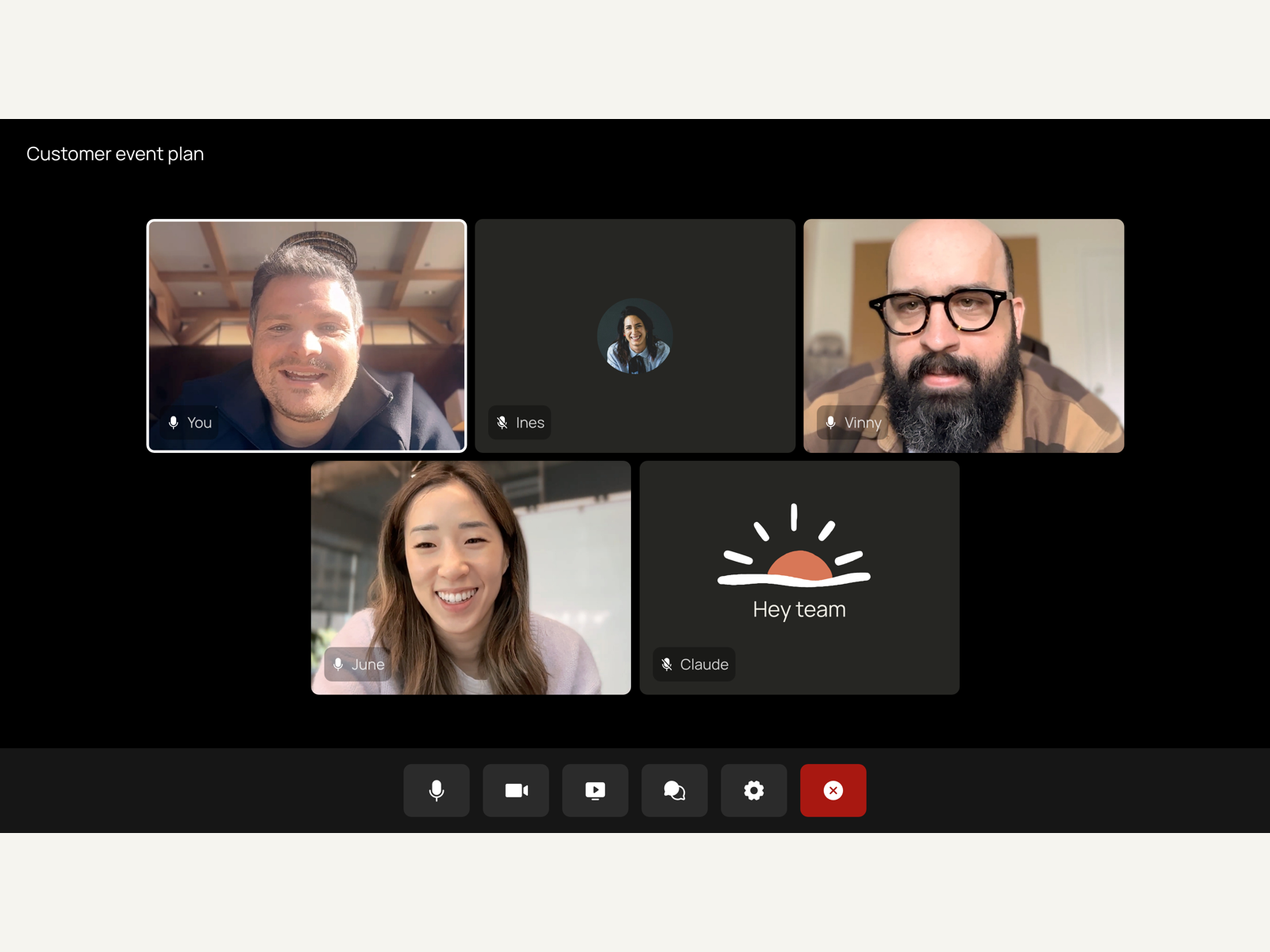
Anthropic announced Claude Meetings on November 12, 2026, bringing Claude into video calls as a visible participant. The beta is starting to roll out on Team and Enterprise plans, with Google Meet supported first. Rather than only transcribing a conversation, the product is designed to answer questions, capture notes and action items, and help a team create documents, whiteboards and other artifacts while the meeting is still underway.
Dji Banner Inside Article - 728x90

According to the announcement, people can address Claude out loud or through the call’s chat. Claude replies in writing by default and can use connected tools with the relevant person’s permission. These are Anthropic’s stated capabilities, not independent test results for transcription accuracy, speaker identification or the reliability of generated action items.
Starting the work before the call ends
Claude follows the conversation and works with the team on live documents, whiteboards and other artifacts. Teammates on the invitation can refine those outputs while Claude writes notes and action items. The intended workflow is a working document that evolves with the conversation, rather than a plan that somebody has to reconstruct after the call.
Anthropic illustrates this with a team planning a customer event. When someone asks Claude to start a document for the plan, it writes up what the team has discussed so far. Invitees can edit the document as the conversation continues. If a participant asks what last year’s event cost, Claude requests approval to look it up, posts the result in the meeting chat and compares it with the current plan. When the discussion reaches scheduling, someone can ask for a whiteboard and the team can work on the timeline alongside the document.
Before the meeting ends, a participant can ask Claude to share a recap with the team. This is an illustrative product scenario, not evidence of a real customer outcome or an independently measured productivity improvement.
A separate page for notes, transcripts and artifacts
Each meeting gets its own page on claude.ai, containing notes, a transcript and everything Claude created. Notes, action items, plans and whiteboards remain available after the call. People from the organization who were on the invitation can view the page and edit Claude’s work. The page can also be shared with others in the organization.
Users can return to meetings they participated in and ask Claude questions about them, or add Claude to a future meeting from the calendar in claude.ai. Anthropic says it is working with partners including Gong, Attention, Granola, Fireflies.ai and Otter so that meeting transcripts can be sent to tools teams already use. The announcement describes this as coming soon, so these integrations should not all be treated as available at launch.
External guests and connected tools have distinct controls
The current Claude Meetings help guide says calls with outside guests are allowed by default on Team plans and disabled by default on Enterprise plans. An owner can change this setting. When outside guests are not allowed, Claude stays out of calls with an external invitee and leaves if one joins partway through. When outside guests are allowed, Claude posts its notice in the call chat but does not reply there, and their contributions are included in the notes and transcript. Outside guests do not get the internal meeting page or recap email.
Claude uses each person’s connected tools with that person’s permission. It asks on first use, and approval applies going forward. For now, an out-loud request prompts a confirmation each time to establish who is speaking. Any answer posted in the call’s chat is visible to everyone in the meeting, an important distinction when connected tools can return internal information.
No stored audio does not mean no stored meeting content
When Claude joins, it appears as a participant and posts a notice in the call’s chat. Anthropic says it stores a transcript, summary and screen descriptions, rather than audio. Written records may still contain sensitive information, so the absence of a saved audio recording should not be confused with the absence of retained meeting content.
Anthropic asks users to make sure everyone on a call agrees to being transcribed before adding Claude or enabling auto-join. For customer conversations and sensitive internal discussions, consent, sharing scope and external-guest settings therefore need to be considered together.
Availability and organizational restrictions
Claude joins when someone adds it or has auto-join enabled. Google Meet is the first supported platform; other video-conferencing services are described as coming soon without a specific launch date. On Team plans, inviting Claude to meetings is available by default and an administrator can switch it off. On Enterprise plans, an administrator enables it for all or part of the organization.
Some organizations are excluded during the beta, including those using zero data retention (ZDR), a HIPAA-ready configuration or customer-managed encryption keys (CMEK). Having a Team or Enterprise subscription therefore does not on its own guarantee access for every organization.
Beta pricing and the February 10, 2027 deadline
During the beta, notes and transcripts are free on Team and Enterprise plans. Answers in calls are also free unless an answer uses a connected tool, in which case it counts toward the individual’s usage and may result in charges for the organization. Documents, whiteboards and other artifacts created during a call are stated to be free through February 10, 2027.
The announcement does not set out artifact pricing after that date, Türkiye-specific pricing or a timetable for additional meeting platforms. Teams should distinguish the beta’s included features from connected-tool usage and their organization’s eligibility. Claude Meetings combines meeting records with live work creation; its practical value will depend on accuracy, permission management and how well it fits a team’s existing workflow.
Source: Anthropic / Claude, “Introducing Claude Meetings”, November 12, 2026.
Additional verification: Claude Help Center: Use Claude Meetings.


