




Smartphone chip shipments fall 21% as memory costs squeeze the market
Mobile
Hits: 6
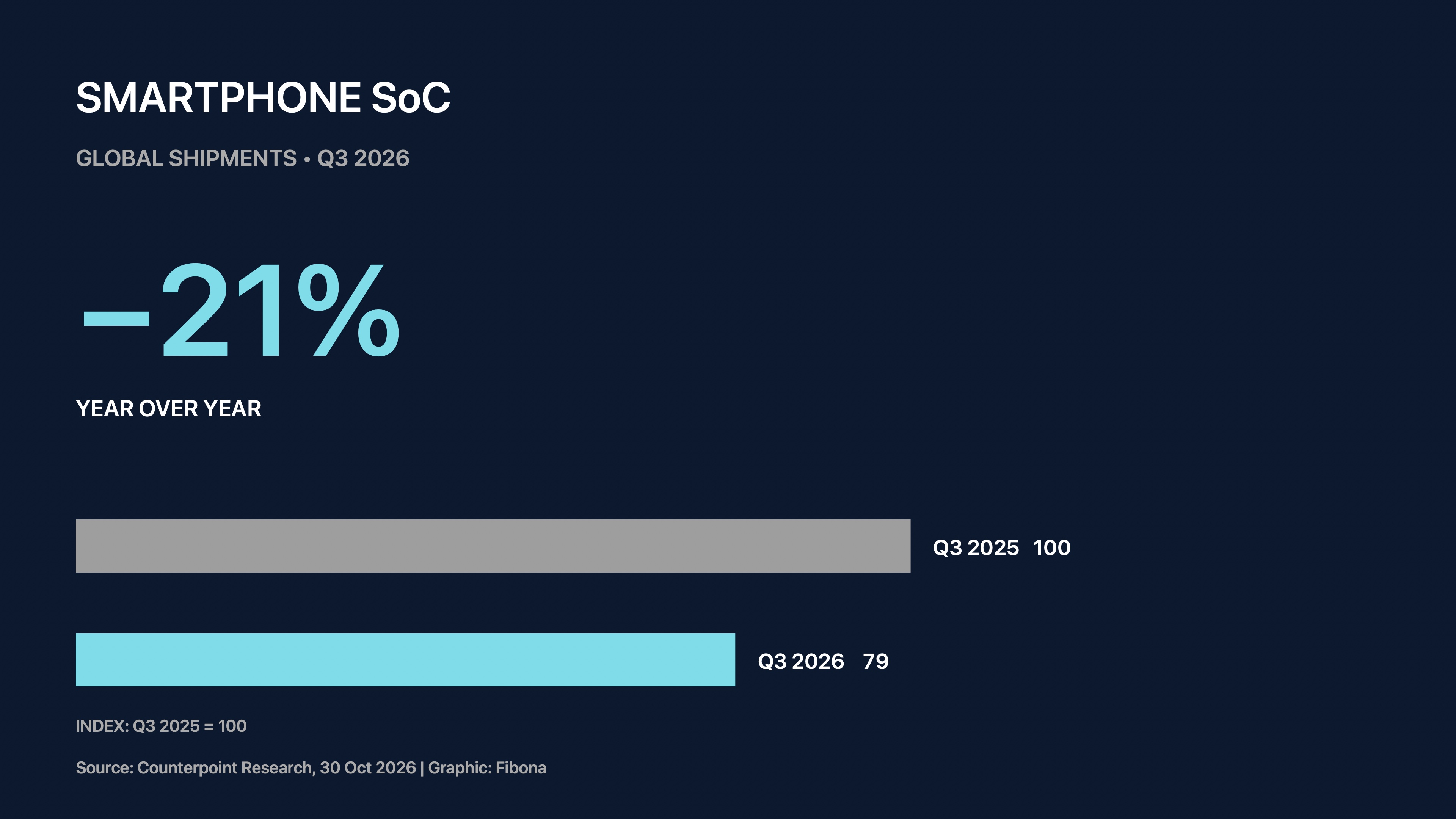
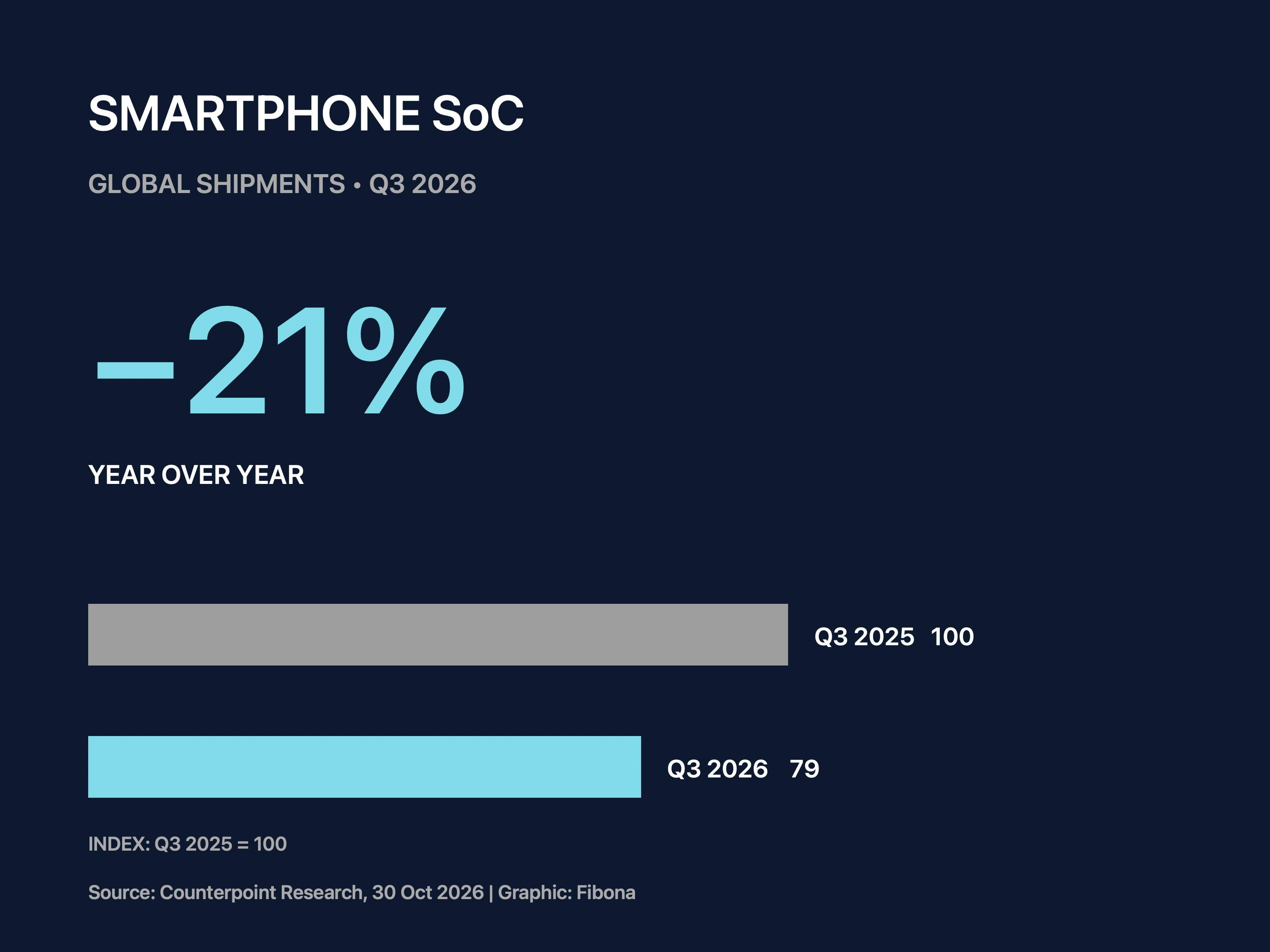
Global smartphone system-on-chip shipments fell 21% year on year in the third quarter of 2026, according to Counterpoint Research’s report published on 30 October. Higher memory costs, longer phone replacement cycles and cautious inventory decisions are pushing device makers to protect margins rather than chase volume.
A shipment decline, not a revenue figure
A system-on-chip, or SoC, integrates processor cores and other essential functions on one chip. The reported 21% decline measures shipment units worldwide. It should not be confused with a 21% fall in chipmakers’ revenue or the monetary value of the entire smartphone market.
Lower-priced phones bear the greatest pressure
Counterpoint identifies entry-level and mid-priced devices as the hardest-hit segments. Manufacturers have reduced the number of inexpensive models while defending profitability. Premium chips have held up better, but even the high end has not escaped the downturn.
The research firm says Apple and Samsung benefited from integrated supply chains and their established emphasis on premium products. UNISOC and MediaTek were more exposed because of their reliance on lower-priced phones. Qualcomm also faced pressure from Samsung’s mix of Snapdragon 8 Elite Gen 5 and Exynos 2600 chips in the Galaxy S26 family, alongside softer sales among Chinese handset manufacturers.
Flagship launches offer support, but costs remain high
The report highlights September’s Apple A20, MediaTek Dimensity 9600 Pro and Qualcomm Snapdragon 8 Elite Gen 6 launches, all using TSMC’s 2 nm process. Counterpoint analyst Shivani Parashar expects these products to support premium chip shipments in the fourth quarter. Nevertheless, the firm expects volumes to remain below the equivalent quarter of 2025.
Smartphone memory prices increased 5%-10% quarter on quarter in Q3. Counterpoint projects another 5% rise in Q4. Some entry-level phone suppliers have explored reused memory to contain component bills. However, close integration between SoCs, peripheral circuitry and radio-frequency components creates technical barriers, leaving this approach a niche practice.
The forecast extends the downturn into 2027
Counterpoint forecasts a 20% decline in smartphone SoC shipments for full-year 2026, followed by a further 3%-4% decrease in 2027. Principal analyst Soumen Mandal expects memory prices to continue rising, although price volatility may ease next year. Flagship chip volumes are expected to remain broadly stable in 2027, despite higher prices associated with the move to 2 nm manufacturing. Memory and other component costs will continue to weigh on manufacturers.
These full-year and next-year figures are forecasts, not completed market results. The report describes a market in which unit volumes and profitability are moving in different directions, making the distinction between shipment share, sales revenue and margins particularly important.
Source: Counterpoint Research, 30 October 2026. Original reporting adaptation and data graphic by Fibona.


