




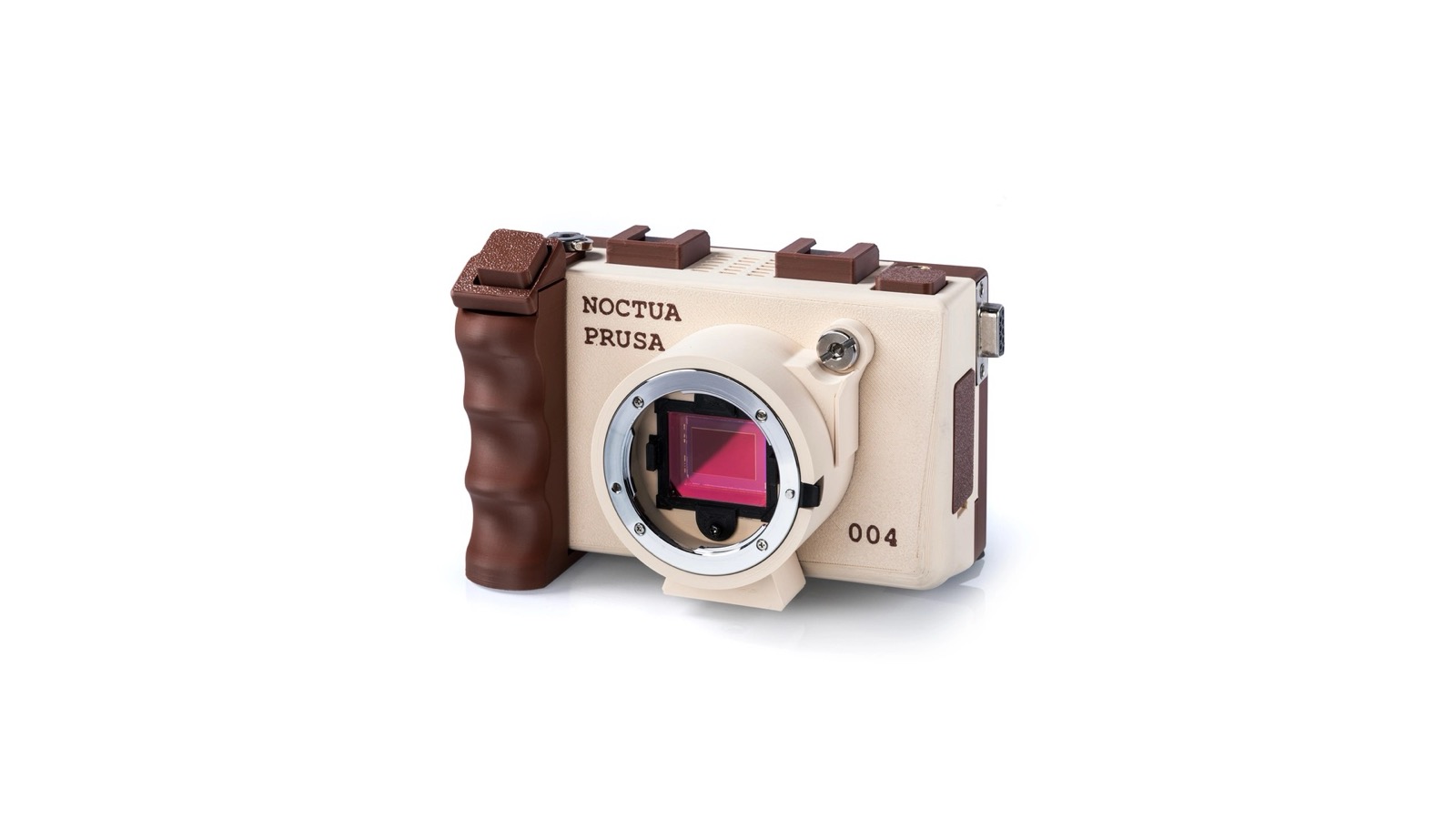
CAIM1 prototype camera aims to prove where photos come from
Photo and Video Technologies
Hits: 19
Proving where a photograph came from is a different task from detecting whether an image was generated by AI. The CAIM1 camera project takes the first approach: it aims to generate cryptographic proof inside the hardware at capture and make that proof independently inspectable afterward. Still a prototype, it combines interchangeable lenses and 4K video ambitions with dedicated security hardware.
A camera in development, not a new retail launch
CAIM1 stands for Counter Artificial Intelligence Machine 1 and is being developed by Josh Cowell and his team. Tropic Square detailed its security partnership on September 23, 2026, while Noctua described the cooling engineering on September 18. The project attracted renewed technology-media attention on November 9. It should not be mistaken for a camera that has just gone on sale.
Noctua's account gives the first quarter of 2027 as the target for the first batch. That is a development goal rather than a firm delivery guarantee. A final retail price and availability in Türkiye have not been announced.
Provenance is not the same as context
The proposed workflow has four stages: capture an image, generate hardware-secured cryptographic proof, anchor verification on decentralized infrastructure, and make the proof accessible for independent checking. The intention is to establish the device origin of a photo or video and provide an inspectable record of the capture chain.
There is an important boundary to that promise. Cryptographic provenance cannot, by itself, establish the context of a scene or the truth of a caption. A scene can be staged, and a genuine camera can photograph an image displayed on a screen. The technical aim is therefore a stronger basis for assessing file origin and integrity, not an automatic guarantee that every narrative attached to the image is true.
The role of TROPIC01
The camera incorporates TROPIC01, a secure element from Prague-based Tropic Square. The company emphasizes its open, auditable RISC-V-based architecture. Rather than asking users to rely only on a closed manufacturer ecosystem, the design is intended to let security researchers examine its underlying implementation.
According to Tropic Square, microscopic manufacturing differences provide a unique silicon fingerprint for distinguishing individual devices. Dual true random number generators supply physical entropy for cryptography, while encrypted internal buses and tamper-resistance mechanisms are intended to protect sensitive operations. These are the supplier's architectural claims, not independent evidence that a finished camera is immune to every possible attack.
A Micro Four Thirds sensor and interchangeable lenses
The current manufacturer page lists a Micro Four Thirds sensor, an E-mount interface and an alternative Micro Four Thirds mount option. Its bring-your-own-lens concept is intended to accommodate modern and vintage optics. That statement should not be read as a promise of identical autofocus, electronic aperture control or other functionality with every lens; definitive compatibility information will matter.
The page also mentions a 4.3-inch touchscreen and an integrated 650 nm IR filter. Noctua describes the engineering workload as high-bitrate 4K capture at 60 frames per second alongside cryptographic proof calculations. Without final codec, bit-depth, dynamic-range and recording-duration details, meaningful image-quality comparisons with established cinema cameras would be premature.
Why a Noctua fan is inside the camera
Processing video and generating security proofs in a compact, protective enclosure creates a substantial thermal load. Noctua says passive heatsinks alone proved insufficient: processors throttled and frames were dropped without active airflow. The selected NF-A4x10 5V PWM fan measures 40 × 40 × 10 mm.
Its native 5-volt supply allows it to run directly from the main board. A conventional 12-volt fan would have required an extra step-up converter, using board space and battery energy and potentially introducing electrical noise that could affect the sensor. PWM control adjusts fan speed to the thermal workload.
A single airflow path draws fresh air across the sensor's metal heatsink backplate, through the fan, over the CPU heatsinks and out through the side of the camera. Anti-vibration mounts isolate the fan from the chassis to reduce effects on audio and image capture. The team reportedly redesigned the main circuit board to accommodate the cooling component.
A printed shell and a physical proof receipt
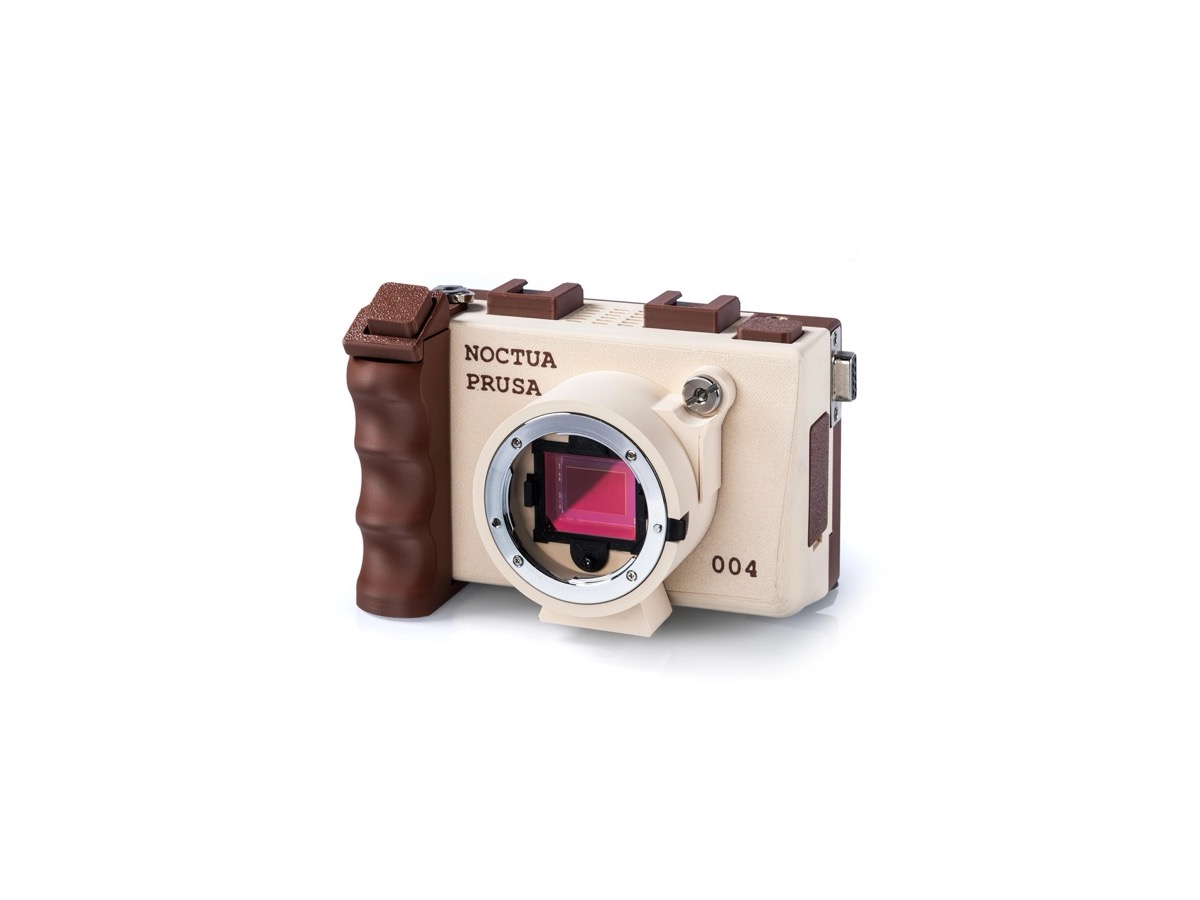
The prototypes use Prusament PETG Noctua Beige and Noctua Brown for the outer shell and fan mount. That describes the current development process rather than guaranteeing an identical enclosure for eventual production units.
Another proposed feature is an optional physical cryptographic receipt associated with the recording. The manufacturer's illustration includes a QR code for a permanent link and a code for access to the verification record. This is better understood as a way to share digital provenance than as a replacement for a photographic print.
CAIM1 is interesting because it treats trust as part of the capture hardware rather than relying entirely on analysis applied to a file afterward. Its practical value will become clearer when the finished device's usability, image quality, security assessments and long-term proof infrastructure can be evaluated.
Sources: CAIM1, Tropic Square, September 23, 2026, Noctua, September 18, 2026.
Dji Banner Inside Article - 728x90



