17.11.2026 16:32







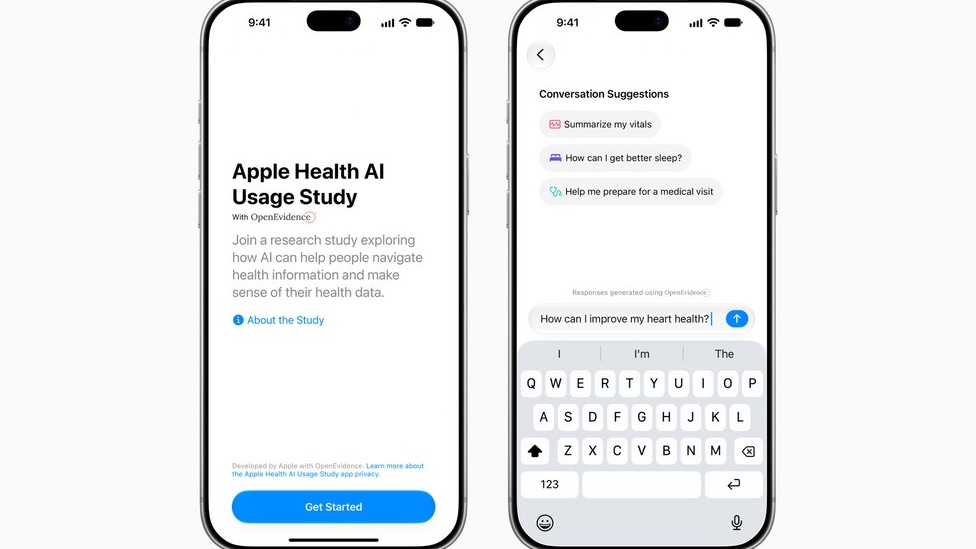
Apple has launched a new study exploring the role of artificial intelligence in personal health. Conducted in collaboration with OpenEvidence, the Apple Health AI Usage Study will be open to up to 200,000 participants in the United States.

Announced on November 15, the project is a research study rather than the commercial launch of a personal health assistant. It will examine how people interact with health AI tools, including user trust, comprehension of responses and the relationship between that information and everyday health actions.
Through the study app, participants will be able to explore answers grounded in medical publications to questions ranging from everyday health concerns to sleep. The system aims to explain complex information in accessible language and provide links to relevant peer-reviewed scientific sources.
Participants can choose to share HealthKit information such as resting heart rate, physical activity, sleep and laboratory results. The study will examine how integrating personal data affects the relevance and understanding of the information provided.
Apple says data collected through the study will not be used to train AI models. Participants will retain control over whether they share HealthKit information and survey responses.
The app is not intended to diagnose or treat medical conditions or replace advice from healthcare professionals. AI responses can be incomplete or unclear, so participants should consult a healthcare professional about health concerns and to verify medical information.
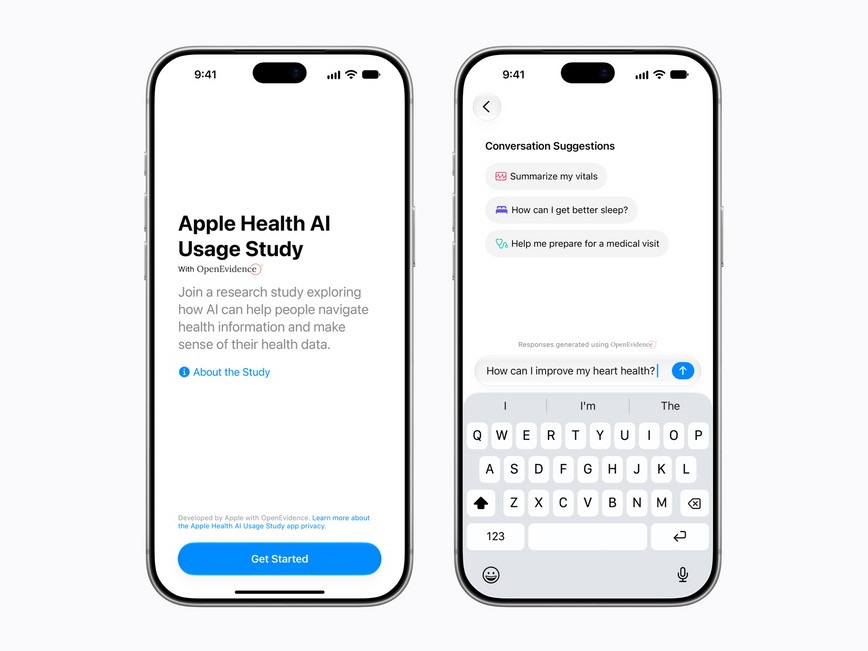
The study is open to eligible US residents aged 21 and older. Participation requires an Apple Intelligence-enabled iPhone running iOS 26 or later.
Wearable technologies have largely focused on measuring and recording health information. This study explores how AI might help people understand that information. Smartphones offering more personalized explanations of health data remain a potential future development; the study does not establish that such benefits have already been proven.
Source: Apple Newsroom, November 15, 2026.