Sam Altman’s Stanford talk is circulating again with a striking social-media claim: prompts are no longer necessary. The promotional framing and the original recording should not be confused. Stanford Online published the lecture on June 15, 2026; it is a discussion of AI, entrepreneurship and infrastructure, not a newly released ChatGPT tutorial.
Dji Banner Inside Article - 728x90
Verification note: We could not verify the viral statement attributed to Altman about no longer needing prompts. We do not present it as a confirmed quotation. The link leads to Stanford Online’s official recording, not the reposting account’s upload. An older talk returning to social media is not a new announcement.
Put the recording in context
The official title is “Stanford CS153 Frontier Systems | Scale, AGI, and the Future of Everything”, and the video runs for approximately 41 minutes. Stanford’s description highlights scale, the development of ChatGPT and Codex, intelligence as infrastructure, and computing capacity. The useful question is what these changes mean for people building and using technology, rather than whether one catchy sentence can replace a thoughtful workflow.
Viewing the video: Stanford Online has disabled playback of this recording on other sites, so it cannot play within this page. Watch the official video on YouTube.
Turkish subtitles: YouTube offers automatic Turkish translation from the English caption track. Select Settings → Subtitles → Auto-translate → Turkish. These are not custom subtitles fully prepared and reviewed by Fibona; terminology and meaning may be mistranslated. For subtitle settings, open the official YouTube page.
A change in workflow, not just another tool
Our interpretation is that an impressive answer is only the beginning of evaluating an AI system. What matters is what that answer becomes in a real workflow. A research assistant that produces unverified information can shift work to the checking stage rather than eliminate it. Generated code similarly requires attention to functionality, maintenance and security.
For founders, this distinction is particularly important. Producing a prototype quickly is not the same as solving a customer’s problem. Defining the need, testing the result and taking responsibility remain separate tasks. Stronger tools do not automatically make those decisions correct.
How should we read the prompt debate?
Restricting the word “prompt” to elaborate command recipes is too narrow. So is assuming that instructions have become unnecessary. When we commission a photographer, developer or editor, we explain the goal. With AI, the intended result, permitted sources and eventual audience still matter. In our view, progress means reaching a reliable, inspectable outcome with less friction, not simply writing longer instructions.
That is why the original recording is more useful than repeating the viral headline as established fact. Readers can watch Altman’s discussion in context and distinguish the speaker’s contribution from the social-media interpretation attached to it. The assessment here is Fibona’s commentary, not an additional statement placed in the speaker’s mouth.
Sources: Stanford Online official video · Stanford CS153 course · The X post examined.
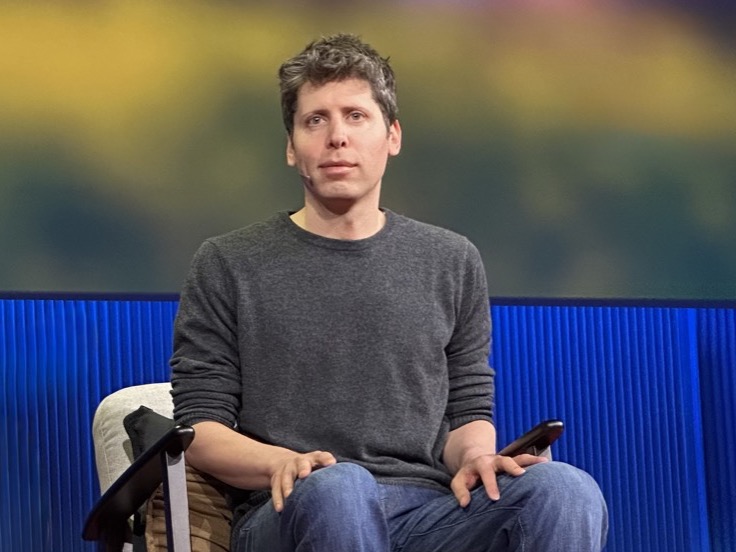
Archive photograph: Sam Altman at TED, April 11, 2025. Steve Jurvetson / Wikimedia Commons, CC BY 2.0. Resized and cropped. This is not a photograph of the Stanford event.