

IEA scenario puts data centre electricity demand at 1,000 TWh in 2030
Energy
Hits: 15
In its World Energy Outlook 2026, published on 19 November, the International Energy Agency projects that annual global data centre electricity consumption could reach about 1,000 terawatt-hours (TWh) in 2030. That would be roughly double the 2025 level in its Stated Policies Scenario (STEPS), not an observed result or a certain forecast.
AI accounts for about three-quarters of the additional demand
The report attributes roughly three-quarters of the increase from 2025 to 2030 to AI-optimised data centres. The 1,000 TWh is the annual total for all data centres, including cloud services and other workloads; it is not an estimate of AI electricity use alone.
The power mix varies between regions
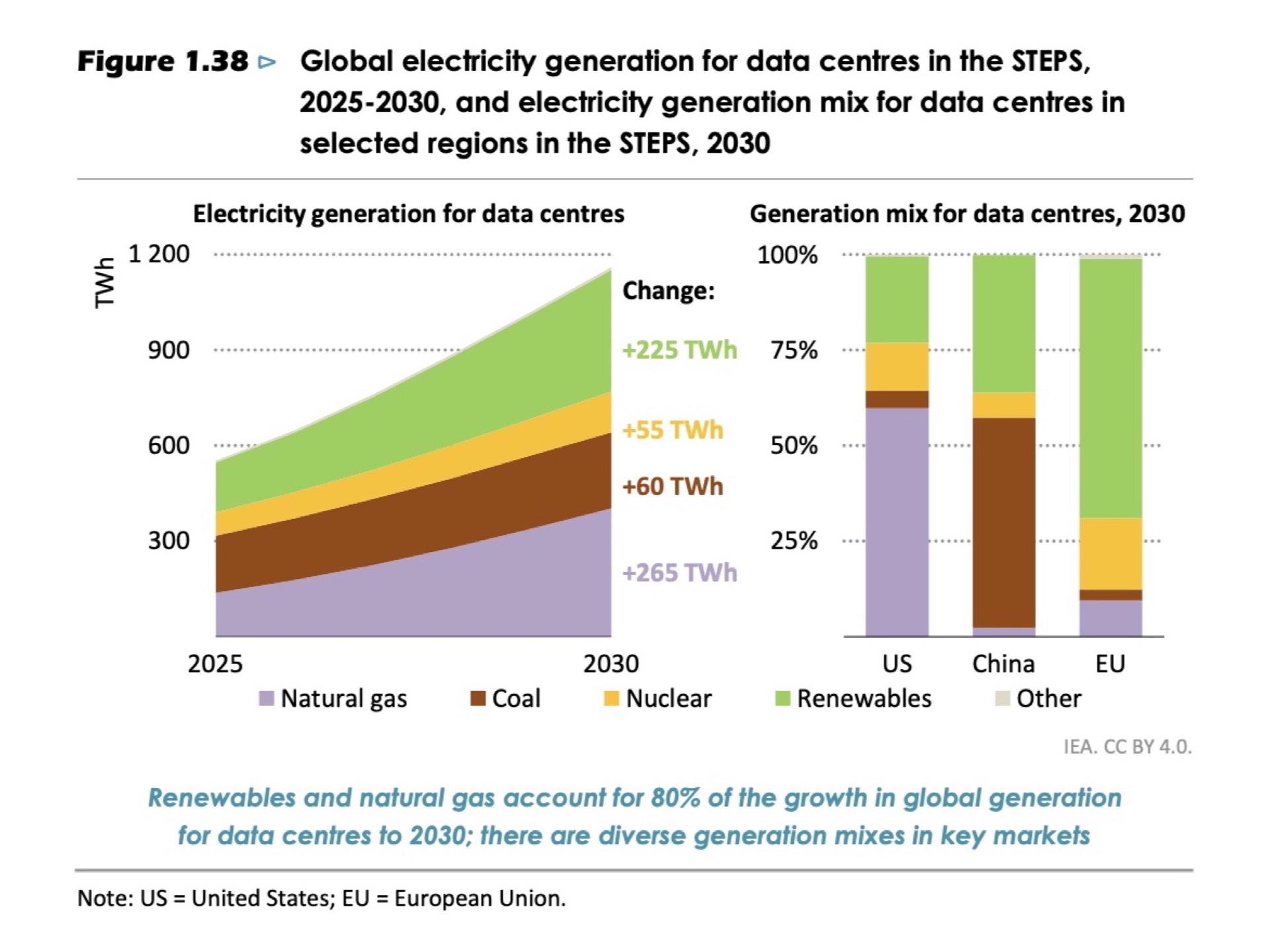
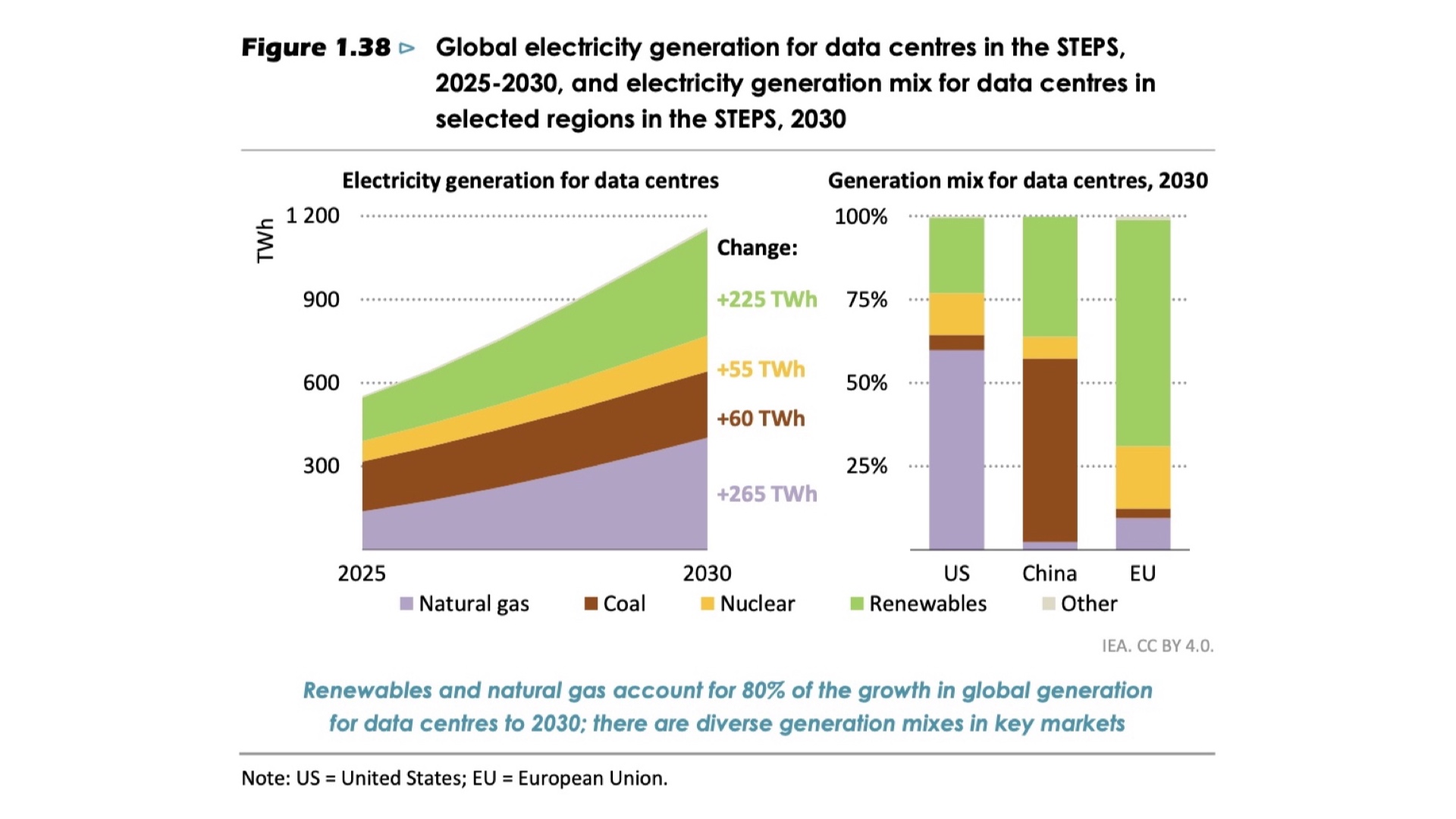
Figure 1.38 compares the sources of electricity for data centres and shows selected regional power mixes in 2030. In this scenario, emissions associated with generation for data centres rise about 70% from 2025 to 2030. That is not the rate of change in total energy-sector emissions or a measure of an individual data centre’s footprint.
The agency identifies grid connections, supply chains and, in some markets, public acceptance as constraints where construction is concentrated. The outcome depends on where capacity is built, the mix of generation that serves it and how stated policies are implemented.
IEA key findings · Original Figure 1.38 (p. 85) · CC BY 4.0 licence